
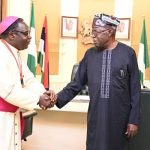




Malam Nuhu Ribadu, Nigeria’s National Security Adviser (NSA), highlighted the potential of technology to address the country’s complex security issues through conflict resolution mechanisms.
Ribadu made these remarks during a national stakeholder engagement and the launch of the Early Warning, Early Response (EWER) programme, organized by Mercy Corps on Tuesday in Abuja.
Represented by Mr. Sunday Ogar, Deputy Director of Crisis Response at the NSA’s office, Ribadu commended the Institute for Peace and Conflict Resolution (IPCR) for its efforts in leveraging technology to prevent and resolve conflicts across Nigeria.
According to Ogar, standing in for Rear Admiral Robert Obande-Obeya, Director of the Presidential Communications Command and Control, the role of technology is crucial in addressing the nation’s conflict challenges.
“The establishment of the EWER situation room marks a significant step in enhancing conflict response indicators, ultimately promoting peace and security in Nigeria and Africa at large,” Ogar said.
He praised IPCR’s commitment to aligning with the national security strategy by implementing technology-driven solutions that foster peaceful coexistence and strengthen institutional conflict resolution capacity.
The program, he said, would also support economic development and humanitarian efforts.
Ribadu emphasized the NSA’s commitment to partnerships focused on information sharing, community-led initiatives, and grassroots engagement, aiming to make data-informed security decisions for Nigeria.
Dr. Joseph Ochogwu, IPCR’s Director General, affirmed the institute’s dedication to peace promotion across Nigeria and Africa. He revealed IPCR’s collaboration with a consortium led by Mercy Corps Nigeria, with support from the West African Network for Peacebuilding, Kaduna State Peace Commission, and Plateau Peacebuilding Agency.
The consortium, named Peace Action for Rapid and Transformative Nigerian Early Response (PARTNER), funded by USAID, began in February 2022 across nine states, including Plateau and Kaduna.
Ochogwu explained that PARTNER’s implementation includes conflict and stakeholder mapping and the formation of community-based peace structures, such as Early Warning Monitoring and Reporting Groups (EWMRG), Community-Based Reconciliation Committees (CBRC), and Gender Focal Persons (GFP).
He added, “This initiative has empowered communities to monitor and report conflict indicators, enhancing local ownership and participation in early warning systems.”
Angela Martin, Director of Peace and Development at USAID Nigeria, reiterated the U.S. commitment to building conflict resilience and bolstering governmental peacebuilding institutions.
Similarly, Ndubisi Anyawu, Mercy Corps Country Director, remarked on the importance of partnerships among national, local, and international stakeholders to advance peacebuilding and nation-building objectives.
