
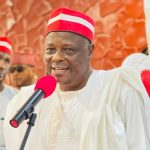
Rumors are circulating within Kano’s political circles that Senator Rabi’u Musa Kwankwaso, the former governor and 2023 NNPP presidential candidate, is planning to abandon his struggling political party to rejoin the All Progressives Congress (APC). His supposed aim is to help President Bola Ahmed Tinubu secure a second term in 2027. However, the political landscape of Kano has changed significantly, and Kwankwaso is no longer the formidable force he once was.
Today’s Kwankwaso is a shadow of his former self. His political missteps and dictatorial approach have alienated many of his supporters, especially within Kano Central, where he previously enjoyed overwhelming popularity. He has lost credibility among his followers due to his controversial decisions, and many believe his political influence is rapidly declining.
One of the major accusations against him is his direct involvement in the demolition of properties worth billions of naira at Masallacin Idi Market and Kofar Wambai Market. Under his directive, his handpicked governor, Abba Kabiru Yusuf, has engaged in reckless governance, destroying businesses and livelihoods. Many Kano residents view this as a senseless act of vengeance, and the political damage it has caused Kwankwaso is irreversible.
Kwankwaso’s decision to reinstate Sanusi Lamido Sanusi as Emir of Kano has further divided the state. His obsession with dethroning the four newly created Kano Emirates and restoring Sanusi, despite public opposition, is a clear sign of his disregard for Kano’s traditional institutions. The move has been widely criticized as politically motivated rather than a genuine attempt to uphold cultural heritage.
It is evident that Governor Abba Kabiru Yusuf is merely a puppet in the hands of Kwankwaso. No major decision is taken in Kano State without Kwankwaso’s approval, making it clear that the governor is not in control of his own administration. This level of interference has frustrated many within the Kwankwasiyya movement, leading to an exodus of former loyalists who no longer believe in Kwankwaso’s leadership.
Kwankwaso has also been accused of betraying his close associates. A prime example is his treatment of Abdullahi Baffa Bichi, the immediate past Secretary to the State Government. After benefiting from Bichi’s resources, loyalty, and dedication, Kwankwaso discarded him like an expired commodity, leaving him politically stranded. This has served as a warning to many of his former allies, who now hesitate to trust him.
President Tinubu, a master strategist, understands the dynamics of Kano politics and knows that he does not need Kwankwaso to secure the state in 2027. There are already three major political figures in Kano who have the influence, popularity, and strategic acumen to deliver massive votes for the APC.
The first is Senator Suleiman Abdulrahman Kawu Sumaila, a serving senator from Kano South. Kawu’s influence extends far beyond his senatorial district. He is a grassroots politician with deep connections across the state, making him a formidable force in Kano’s political landscape.
Another strong political leader is Kabiru Alhassan Rurum, the former Speaker of the Kano State House of Assembly and current member representing Rano, Kibiya, and Bunkure Federal Constituency. Rurum is widely respected for his political dexterity, mobilization skills, and strong grassroots support, which make him a valuable asset in Kano’s political game.
Then there is Alhassan Ado Doguwa, the former House Leader and the only APC member in Kano South who managed to win his election despite the wave of Kwankwaso’s NNPP in 2023. Doguwa has remained a resilient and influential political figure, and his presence in Kano politics ensures that the APC has a strong foothold in the state.
Even Kwankwaso himself knows that he is politically vulnerable against these gladiators. He has never been able to establish dominance in Kano North because of the towering influence of Deputy Senate President Barau Jibrin. Barau has built an unshakable political structure that Kwankwaso cannot penetrate.
In Kano Central, Kwankwaso’s declining relevance is even more evident. Heavyweight politicians like Baffa Babba Dan Agundi, the former Majority Leader in the Kano State House of Assembly and current Director-General of the National Productivity Centre (NPC), have built strong political bases that challenge Kwankwaso’s fading influence.
Additionally, Rep. Aliyu Sani Madakin Gini is another formidable politician whose grassroots support and strategic political alliances make him a major player in Kano’s political equation. Unlike Kwankwaso, who has alienated many of his allies, these leaders have built inclusive political networks that make them more reliable partners for President Tinubu.
The idea that Kwankwaso is needed for Tinubu’s re-election is a mere illusion. His political capital has been severely depleted due to his controversial decisions, betrayal of allies, and dictatorial style of leadership. He is now more of a liability than an asset in Kano’s political terrain.
Instead of seeking to align with Kwankwaso, the APC should focus on strengthening its existing political structures in Kano, leveraging the influence of key political figures like Kawu, Rurum, and Doguwa. These are the real kingmakers in Kano today, and they have the capacity to deliver the state for Tinubu in 2027.
Kwankwaso’s reputation as a political heavyweight has been eroded by his arrogance, poor decision-making, and inability to maintain loyalty among his allies. The political landscape in Kano is changing, and he is no longer the central figure he once was.
President Tinubu does not need a politically wounded Kwankwaso to win Kano in 2027. The APC already has more reliable and influential political figures who can deliver the votes. The era of Kwankwaso’s political dominance in Kano is over, and the APC should focus on building a stronger coalition with those who truly matter in the state’s political dynamics.
Garba Ubale Kankarofi wrote this piece from Kano. He can be reached at garbakankarofi09@gmail.com or +234 706 816 0279.
