

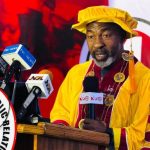



The Nigerian Supreme Council for Islamic Affairs (NSCIA) has backed the passage of tax reform bills before the National Assembly, stressing the need to address concerns raised by different sections of the country.
Led by its Presidential-General and Sultan of Sokoto, Alhaji Muhammad Sa’ad Abubakar III, the council submitted a memorandum during a public hearing organized by the Senate Committee on Finance. The document was presented by NSCIA’s Head of Legal Unit, Barrister Haroun Eze, who also serves as an Imam at the National Mosque, Abuja.
The tax reform bills have sparked debates, with opposition from Northern leaders and governors who argue that the reforms primarily favor Lagos State and certain interests, potentially marginalizing the North. The disputes have led to confrontations in both chambers of the National Assembly.
NSCIA stated that its intervention was based on the importance of the bills to Nigerians, particularly the Muslim Ummah. It noted that it only became aware of the public hearing through the media on February 24 but found it necessary to present recommendations.
“The NSCIA, as the representative of all Muslims from all parts of the country, recommends that all the major technical and political-socio issues raised by different sections and segments of the country should be diligently considered, equitably addressed to the satisfaction of almost, if not all, segments of the country,” the council stated.
The memorandum also raised constitutional concerns, particularly regarding provisions that might conflict with Islamic law. The council cited the 1999 Constitution (as amended), which provides for Shariah Courts of Appeal on Muslim personal laws, such as marriage and inheritance. It urged the removal of any sections of the bills that could directly or indirectly contravene these laws.
“The 1999 Constitution of the Federal Republic of Nigeria (as amended) provides for the establishment of Shariah Court of Appeal for Muslim personal laws, which include marriage and inheritance. Therefore, all sections of the bills that may directly or indirectly impugn on the law on Shariah would be unconstitutional and should therefore be removed,” the NSCIA stated.
The council also recommended changing the term “ecclesiastical” in a section of the bills to “religious” to ensure inclusivity.
“The term ‘ecclesiastical’ used in a section of the Bills should be changed to ‘religious’ in order not to give the impression that it excluded some religious groups,” the memorandum read.
NSCIA affirmed its support for the passage of the tax reform bills, provided its recommendations are considered.
“Taken all its recommendations into consideration, the Nigerian Supreme Council for Islamic Affairs recommends the passage of the Bills. While we appreciate the opportunity to make this submission, the Council remains committed to constructive engagement in national policy formulation and legislative reforms,” the statement added.
