
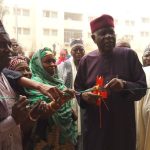
Aminu Dantata’s passing at 94 marked the end of a legacy. A billionaire businessman, philanthropist, and one of the most influential figures in Nigeria’s post-independence economic history, he was a pillar of Kano. But when it came time for his final return, he didn’t come home.
He died in Abu Dhabi. He was buried in Madinah. And I think we need to talk about that.
Let me be clear: burial in Madinah is an honour in Islam. For many Muslims, it is the highest aspiration. I do not question the sincerity of Aminu Dantata’s faith. But I do question the message this burial sends about class, power, belonging, and how the ultra-wealthy African elite choose to exit the world they shaped.
Kano gave Dantata everything — his name, his empire, his honour. In return, he gave generously: schools, businesses, mosques, foundations. He poured back into the city, no doubt. But when the moment came to lay down his body — to reconnect physically with the soil that raised him — he chose a foreign land. A spiritually sacred land, yes, but not his land. Not the land of talakawa. Not the land of the hawkers, students, and labourers who built and sustained the economy he benefited from.
That matters.
It matters because burial is not just about personal piety — it is about social accountability. Public death is part of how communities heal, remember, and honour their dead. When public figures opt out of that, especially from the perch of the global elite, it sends a message: that your final place of rest is only for those with enough power and money to secure sacred ground far from the people you served.
We must ask: what are we saying about dignity, about place, about the meaning of a life — when those who benefit most from a society do not see themselves as part of its ending?
This is not just a spiritual decision. It is a political act. It reflects a broader pattern among Africa’s elite: to live off the land, but not with it. To own the land, but not be buried in it. To speak of community, yet remove oneself from its final rituals. This is what happens when wealth becomes untethered from responsibility. When the bodies of our most powerful do not return to the earth that sustained them, we lose a vital moment of reckoning.
For a man who built his fortune in a region where millions cannot afford a decent burial — much less a trip to Makkah — dying abroad and being flown to Madinah for interment is not just aspirational. It is inaccessible. This is where faith and class collide. When burial in Madinah becomes a symbol of ultimate success, it quietly reinforces a hierarchy of spiritual worth that favours the rich.
That should make us uncomfortable.
We can hold two truths: that Aminu Dantata was a devout man who gave a lot to his community, and that — in choosing to be buried far from that same community — he participated in a form of spiritual elitism that is rarely interrogated in public.
And interrogate it we must.
Because if we don’t ask these questions — about where our leaders die, where they are buried, and what that says about who they believed they belonged to — then we risk reinforcing a system in which the ultra-wealthy escape even the final accountability of being laid to rest among those they leave behind.
There is a Hadith that urges us to live in this world as strangers or travellers. But even travellers come home to be buried. The Prophet Muhammad (peace be upon him) is buried where he lived, struggled, and died — among his people, in the city he built.
That is the model.
Aminu Dantata may have reached Madinah. But he left Kano waiting.
Dr. Nafisa Baba-Ahmed
