

The reality in Nigeria today is that we do not have a normal party system. Things are becoming dissimilar, and our politicians keep changing their attitudes and behaviors.
What we keep seeing today are notorious and tarnished political parties. The year 2027 will also be another acid test for both political parties and politicians.
Our political parties and those who claim to be leading us have failed woefully to adhere to unwavering principles, often surrendering to the whimsical demands of tainted circumstances.
Political parties in Nigeria seem unbothered by the upsurge of criticism from the masses. The belief is that a leopard never changes its spots.
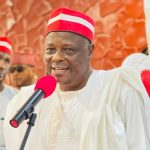
The defection of three political heavyweights—Alhaji Atiku Abubakar, Engr. Rabiu Musa Kwankwaso, and Senator Bukola Saraki—before the 2019 general elections to the PDP remains a significant event in Nigeria’s political history. And this is exactly what appears to be happening now among Alhaji Atiku Abubakar, Senator David Mark, and Nasir El-Rufai in the ADC.
Since the return of democracy in 1999, the real test of politics may take place in the 2027 elections.
The last time Nigeria witnessed a similar demonstration of true democratic engagement was during the failed third-term bid that was jettisoned, dumped, and ultimately buried in 2007. A similar moment was also seen in the 2015 elections.
A one-party system or monopoly in politics is a great danger to democracy. It portends hiccups, pitfalls, and problems. That is why, after 16 years of PDP dominance in Nigerian politics, the formation of another strong opposition party in 2013 was a welcome development. It is healthy for democracy to have a vibrant opposition—and this is what now unsettles the APC.
In November 2013, five governors from the G7 group opted to join the APC, posing a major threat to the ruling party. These governors, who were at loggerheads with the PDP, crossed the Rubicon after lengthy deliberations and consultations. The governors were Rabiu Kwankwaso of Kano State, Murtala Nyako of Adamawa State, Rotimi Amaechi of Rivers State, and Abdulfatah Ahmed of Kwara State.
Before the merger, the governors had organized their opposition to certain practices within the PDP under the banner of the “New PDP (nPDP),” headed by Abubakar Baraje.
The lingering APC crisis, which led to Ganduje’s resignation, and the emergence of a new opposition coalition under the ADC, pose serious challenges to the ruling party. We look forward to seeing what unfolds before the convention and beyond.
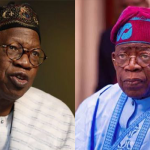
Also, the rumored and covert deals allegedly struck between the Jagaban, Kwankwaso, and others seem increasingly unfeasible given the current political realities. But time will tell.
The upcoming elections in some states will serve as a litmus test for the APC before 2025 elapses.
Our political parties must understand that glory lies not in never falling, but in rising every time we fall. And the time is always ripe to do what is right.
At this moment, understanding the political terrain would be a significant advantage.
Muazu Muazu is a journalist and political analyst based in Kano. He can be reached at muazumj@gmail.com
