
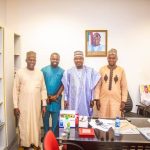
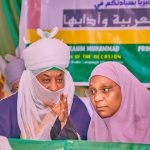
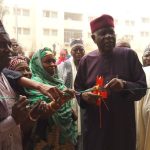
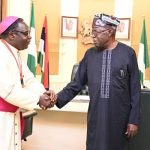
Today, August 30, 2025, marks the 77th birthday of Alhaji Sule Lamido, a towering figure in Nigerian politics whose life has been defined by loyalty to ideals, service to humanity, and unshakable commitment to democracy.
Born on August 30, 1948, in Bamaina, Birnin Kudu Local Government Area of Jigawa State, Lamido’s political journey began in the Second Republic under the mentorship of the late Malam Aminu Kano. As a young man in the People’s Redemption Party (PRP), he was elected to the House of Representatives in 1979, where he quickly distinguished himself as a voice for the voiceless. Since then, Lamido has remained one of the most consistent advocates for the “Talakawa”—the poor and marginalized.
Through decades of turbulence in Nigeria’s political history, Lamido has stood firm. As National Secretary of the Social Democratic Party (SDP) in the Third Republic, he pursued politics as service, not strategy. When General Sani Abacha attempted to perpetuate himself in power, Lamido’s bold resistance landed him in prison in 1998. Yet his resolve did not waver; it only deepened his conviction that democracy was worth every sacrifice.
Lamido was also at the heart of the movements that birthed the People’s Democratic Party (PDP) in 1998, from the G-9 to the G-34, standing alongside the likes of Alex Ekwueme, Jerry Gana, Iyorchia Ayu, and Olusegun Obasanjo. Unlike many who abandoned the PDP in search of power, Lamido has remained steadfast—earning him the title of “the last party man standing.”
His service as Nigeria’s Foreign Minister between 1999 and 2003 under President Obasanjo further cemented his reputation. He tackled critical issues such as human trafficking, child labor, and slavery, earning respect at home and abroad for projecting integrity in Nigeria’s foreign relations.
As governor of Jigawa State from 2007 to 2015, Lamido transformed a once-overlooked state into a model of progress. Dutse, the state capital, came alive under his leadership—housing estates, a Three Arms Zone, and modern infrastructure turned it into a befitting headquarters. He invested in education, healthcare, and civil service reforms, establishing the Manpower Development Institute to raise a new generation of skilled public servants.
Lamido’s politics was never about personal ambition. Even when he contested the PDP presidential ticket in 2018, it was driven by a desire to offer vision and credibility. His insistence on loyalty to the PDP, even during the storm of defections in 2013, remains one of his defining legacies.
Often described as courageous, resolute, and controversial, Lamido has always been guided by principles rather than convenience. President Bola Ahmed Tinubu once described him as “a brother and a longtime friend, fair, firm, and resolute in his belief in people as a politician.” Former Lagos governor, Babatunde Fashola, similarly praised him as “a man whose word has value and whose conviction is deep.”
Today, as he celebrates 77 years, Sule Lamido stands as more than a former governor, minister, or party leader. He is a living reminder of when Nigerian politics was about principle, not position—about service, not self.
His legacy, etched in loyalty, courage, and vision, will inspire generations to come.
Buhari Abba, a journalist, wrote this piece from Kano, Nigeria.
