
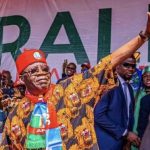
Politics, especially in Kano state, is never short of drama—it is a theater where alliances are built with sweat, nurtured with loyalty, and sometimes discarded without ceremony, and the latest episode, the expulsion of Hon Abdulmumin Jibrin Kofa from the New Nigeria People’s Party (NNPP), is not just a personal setback for the lawmaker but a statement about the fragile nature of power, loyalty, and ambition in Nigeria’s political space.
For over a decade Jibrin was not merely a loyal protégé of Senator Rabiu Musa Kwankwaso, he was the bridge that linked the Kwankwasiyya movement to national politics, often absorbing political bullets on behalf of his mentor, and his story is proof that in politics, being indispensable can sometimes be the surest route to disposability.
Back in 2011 Jibrin was little known outside the world of business, yet Kwankwaso, in his second term as governor, spotted a rare blend of intelligence and organizational acumen and handpicked him for the House of Representatives, a trust that paid off with a shock victory over an entrenched ANPP candidate, and from that moment Jibrin’s political destiny was tied to Kwankwaso’s chariot.
Wherever Kwankwaso went Jibrin followed—the 2013 mass defection to APC, he was there; the internal crisis between Kwankwaso and Ganduje, he played peacemaker, choosing diplomacy over division; in Abuja he cut his teeth as a legislative strategist, sometimes rebellious, other times pragmatic, but always effective, and twice he played decisive roles in determining the leadership of the House of Representatives, proving that his reach extended well beyond Kano.
Yet politics rewards loyalty only so long as it aligns with prevailing interests, and Jibrin’s recent appearance on Channels Television, where he openly backed President Bola Tinubu for 2027 and suggested Kwankwaso might be plotting a return to the APC, was a gamble too far—for the NNPP leadership, already wary of his growing independence, it was the perfect excuse to sever ties.
The language used by Kano NNPP chairman Hashim Sulaiman Dungurawa was telling, for he did not just accuse Jibrin of anti-party activities and unpaid dues, he questioned his very political relevance, claiming he had “no value to add,” and this was less about party discipline and more about humiliation—the bridge was not only broken, it was publicly burned.
But if Jibrin’s sin was speaking out of turn, Kwankwaso’s silence is equally instructive, for the man who once relied on Jibrin to negotiate political survival now watches as his protégé is cast aside, and it suggests one of two things, either Kwankwaso no longer finds him useful, or Jibrin’s revelations about a possible APC return were closer to the truth than the NNPP establishment cares to admit.
For the Kwankwasiyya movement Jibrin’s exit leaves a strategic vacuum—he was not just another loyalist, he was the link between grassroots mobilization in Kano and power brokering in Abuja, and losing him may not cripple the movement, but it certainly weakens its national reach, for politics abhors a vacuum, and someone will eventually fill that space, though perhaps not with the same daring and skill Jibrin brought to the table.
In the end the expulsion is as much a story about Kwankwaso as it is about Jibrin, for it underscores the limits of loyalty in Nigerian politics where protégés are useful only until they begin to think independently, and it also raises uncomfortable questions for Kwankwaso—if even his closest bridge-builder can be discarded so easily, what does that say about the durability of his wider political empire.
For Jibrin this may not be the end, for his career has been built on resilience and reinvention, and if indeed he finds his way back to the APC under Tinubu’s umbrella, history may judge this expulsion not as his downfall but as yet another calculated pivot
What is clear, however, is that a bridge has fallen, and in politics when a bridge collapses, it is not only those who built it that feel the tremor but everyone who once crossed it
Garba Ubale Kankarofi writes from Kano
