

The Kano State Government has adopted a Gender-Responsive Education Budgeting (GREB) Framework to promote inclusivity, transparency, and accountability in education financing.
Governor Abba Kabir Yusuf, represented by his deputy, Comrade Aminu Abdulsalam-Gwarzo, announced this at the closing of a two-day Kano Girls’ Education Summit held on Saturday in Kano.
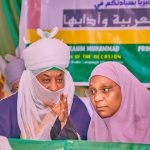
The summit, themed “Investing in Her Future: Advancing Girls’ Education through Equitable Budgeting,” was organised by the Bridge Connect Africa Initiative (BCAI) with support from the Malala Fund, in collaboration with the state government.
Yusuf said the framework reflects his administration’s commitment to ensuring that every girl in the state, regardless of background or circumstance, has the opportunity to learn, grow and contribute to society.
He explained that the GREB framework would guide how education resources are distributed and utilised to address challenges affecting girls’ education in the state.
The governor highlighted some of his administration’s interventions in the education sector, including the distribution of free school uniforms, rehabilitation of girls’ boarding schools, and the absorption of more than 5,500 volunteer teachers into permanent service.
He restated his government’s resolve to rebuild the state’s education system and ensure equal access to quality education for all girls.
The Minister of State for Education, Prof. Suwaiba Sa’id-Ahmad, reaffirmed the Federal Government’s commitment to promoting girls’ education and gender equity.
Represented by her Special Adviser (Technical), Hajiya Umma Kulthum Muhammad, the minister said educating girls remains one of the most powerful investments for building a prosperous and equitable society.
“When a girl is educated, she is more likely to have healthier children, earn a higher income, and contribute meaningfully to her community,” she said.
Sa’id-Ahmad, however, noted that early marriage, poverty, insecurity, and inadequate infrastructure continue to hinder millions of girls from accessing education.
She called for sustained and equitable investment in girls’ education, saying the Federal Ministry of Education, under President Bola Tinubu’s Renewed Hope Agenda, is promoting inclusivity and quality learning through initiatives such as AGILE and LUMINAH 2030, which aim to empower one million underserved girls by 2030.
The minister also said gender-responsive budgeting is key to ensuring that every naira invested in education delivers measurable results, including safer schools, digital access, and improved sanitation for girls.
She commended the Kano State Government, the Malala Fund, and BCAI for their leadership in making Kano the first state to adopt the GREB framework.
The state Commissioner for Education, Dr. Ali Haruna-Makoda, said the government’s reforms are already transforming the education sector across the 484 wards in the state.
“Since the declaration of a state of emergency on education, we have renovated more than 2,000 classrooms, constructed 250 new ones, and facilitated the return of over 30,000 girls to school through the World Bank-supported AGILE project,” he said.
The Executive Director of BCAI, Mr. Sani Muhammad, said education is not just a policy priority but a shared promise of dignity and opportunity.
“Every time a girl stays in school, a door opens not just for her, but for her family and community,” he said.
Muhammad said the GREB framework, developed with support from the Malala Fund, will embed equity and accountability in education financing.
He commended the Kano State Government and the Malala Fund for their commitment to improving girls’ education in northern Nigeria.
