
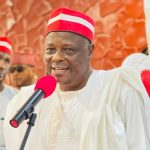



At the heart of any functioning democracy lies a core principle: freedom of choice. This is not simply a slogan; it is a fundamental democratic value upheld by scholars and practitioners alike. From Robert Dahl’s classical theories of polyarchy to Adam Przeworski’s work on democratic accountability, the ability of citizens—and their elected leaders—to reassess alliances and make independent political choices is central to democratic life. It is through this lens that the anticipated or planned decision by the Governor of Kano State to join the All Progressives Congress (APC) must be understood, not as betrayal or disloyalty, but as an exercise of democratic agency in pursuit of service to the people of Kano.
Political theorist Robert Dahl argued that democracy is best understood as a system in which citizens have a continuing opportunity to influence decisions by choosing among alternative leaders and policies. In Democracy and Its Critics, Dahl emphasizes that political competition, realignment, and choice are not flaws in a system; they are signs of a healthy and responsive democracy. If democratic governance is to live up to its ideals, it must allow its actors the freedom to rethink, reassess, and reorient. This academic foundation supports the view that a political decision such as the governor’s intended move is not a violation of democratic norms, but rather a legitimisation of them.
Scholar Adam Przeworski, in his work on democratic accountability, stresses that leaders in a democracy are accountable first to the electorate, not to permanent political patrons or fixed ideological loyalties. Przeworski writes that democracy “requires leaders to be responsive to the preferences of their constituents over time,” implying that flexibility in political alignment is part of responsiveness, not defiance. In this context, the governor’s anticipated decision to join the APC can be seen as an attempt to align Kano State more effectively with federal structures in order to secure resources, representation, and political leverage for the state. Such a recalibration is not self-serving in itself; it is consistent with the demands of democratic accountability that prioritise the public interest.
Kano State is not a laboratory for personal loyalties. It is a large, diverse, and dynamic state with pressing developmental needs—needs that transcend party labels. Political scientist Larry Diamond argues in Developing Democracy that the essence of democratic leadership lies in the capacity to deliver effective governance and improve citizens’ welfare. By this measure, the legitimacy of political decisions must ultimately be judged by their impact on the lives of citizens.
In key areas, Kano State’s government has demonstrated focus and progress. These include sustained investment in infrastructure, particularly road networks that improve transportation and commerce across both urban and rural areas. The government has also pursued education reforms aimed at improving learning outcomes, enhancing school environments, and expanding opportunities for the state’s youth. In healthcare delivery, efforts have been made to expand community health services and strengthen public health institutions. Urban renewal and sanitation initiatives seek to uphold the dignity of public spaces and improve living conditions in towns and cities, while economic empowerment programmes target small businesses, traders, and vulnerable populations. These are pragmatic governance actions that reflect a vision of development beyond political rhetoric.
Critics may label the governor’s anticipated decision a “betrayal” of Dr. Rabiu Musa Kwankwaso. However, such a framing collapses complex political dynamics into oversimplified moral judgments. Political scientists Hana Bäck and Patrick Dumont note in their research on party systems that politics is inherently dynamic and rooted in strategic considerations rather than static allegiances. Kwankwaso himself is engaged in political navigation and future planning—an entirely legitimate democratic pursuit. If political motivation is acceptable for one leader, it cannot be denied to another without creating a double standard that undermines democratic equity.
Democracy thrives in environments of tolerance, dialogue, and mutual respect. Political scientist Benjamin Barber, in Strong Democracy, highlights the importance of civic engagement based on deliberation rather than confrontation. When politics degenerates into bitterness, vendettas, and personal attacks, society suffers—not just the political actors involved. Ultimately, it is the people who pay the price. Kano has always been politically vibrant; it must now demonstrate political maturity by showing that disagreement can exist without hostility and that diverse opinions need not fracture communal harmony.
The governor’s anticipated decision, and the public debate surrounding it, present a test for Kano’s democratic culture. Will we default to partisan outrage, or will we adopt a more reflective understanding of politics as a shared effort to improve human well-being? Democracy is more than a transient contest for power; it is a system grounded in freedom, responsibility, and mutual tolerance. As Nigerian scholar Claude Ake reminded us, democracy must be rooted in citizens’ everyday lives, not in elite posturing.
Kano State must remain above the politics of bitterness and vengeance. The focus should be on inclusive development, respectful disagreement, and collective advancement. Democratic choice should be celebrated, and divisions that weaken communal bonds should be rejected. In the end, history will not remember who switched party affiliations; it will remember who delivered good governance, served the people earnestly, and strengthened unity in diversity. That is the standard Kano deserves—and that is the standard democracy demands.
Maisudan is a Lecturer and Researcher at the Department of Political Science/CDA Bayero University, Kano.
