




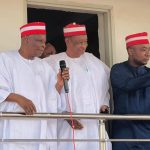
The leader of the Kwankwasiyya movement and former Governor of Kano State, Senator Rabiu Musa Kwankwaso, has declared that he has no “price tag,” insisting that his conscience cannot be bought.
Kwankwaso made the assertion while speaking on recent political developments, where he reflected on issues of loyalty, betrayal and the general state of politics in Nigeria, with particular reference to Kano State.
He noted that politics naturally involves gains and losses, but warned that acts of betrayal often attract public resentment, especially at a time when many Nigerians are dissatisfied with governance.
“Life is like that; one loses, another gets. Of course, he entered a system that has no exit point. First, we know that betrayal is not good. Everybody knows how that party is losing the sympathy of the people, especially with regards to insecurity and the economy,” he said.
The former governor said politics in Kano was different from what obtained in many other parts of the country, stressing that the electorate in the state was politically enlightened and not easily influenced by inducement.
“Kano politics in Nigeria is different. If not in Kano, where is it that one will meet you with a money bag and go into a meeting with you that they will give you things?” he asked.
Kwankwaso dismissed the widespread belief that all politicians could be bought, saying those in search of a politician without a price tag should look to him.
“People used to say in Nigeria that everyone has a price tag. If you are looking for who has no price tag, come to Rabiu Kwankwaso,” he said.
He added that if his primary interest was money, he would have easily placed a value on himself, stressing that no one could approach him with the intention of buying his conscience.
Kwankwaso also warned politicians and voters against pursuing short-term benefits, particularly during election periods when inducements such as cash and materials are often shared.
“You will spend four years suffering and one day they will come and give you peanuts, and then you spend another four years,” he said.
He urged political actors to uphold principles and prioritise the long-term interests of the people, warning that leadership founded on inducement and betrayal could not deliver meaningful development.
