

The Deputy President of the Senate, Senator Barau Jibrin, has called for sustained collaboration between the executive and legislative arms of government as a means of strengthening democratic governance and promoting national development.
Jibrin made the call on Wednesday while delivering the convocation lecture at the 15th Convocation Ceremony of Al-Hikmah University, Ilorin, Kwara State.
The lecture, titled “Managing Executive–Legislature Relations towards Democratic Consolidation in Nigeria’s Fourth Republic,” examined the evolving relationship between the two arms of government since Nigeria’s return to democratic rule in 1999.
The lawmaker said effective governance in a constitutional democracy depended largely on cooperation, mutual respect and strict adherence to the principle of separation of powers.
“As a member of the House of Representatives in 1999 and now in the Senate, I have observed that the executive and the legislature need to work together to address the challenges facing our beloved country,” he said.
According to him, democratic consolidation goes beyond the conduct of periodic elections, stressing that it also includes respect for constitutionalism, rule of law, accountability and effective inter-institutional collaboration.
“In Nigeria’s Fourth Republic, democratic consolidation extends beyond elections. It encompasses adherence to constitutionalism, respect for separation of powers, accountability, rule of law and effective inter-institutional collaboration,” Jibrin said.
He noted that Nigeria operates a presidential system anchored on the separation of powers, adding that the doctrine does not imply isolation or antagonism among the arms of government.
“Separation of powers does not mean isolation. It presupposes structured interaction, mutual restraint and institutional respect,” he said.
The Deputy Senate President recalled that executive-legislature relations in the early years of the Fourth Republic were marked by frequent conflicts over the leadership of the National Assembly, budgetary processes and oversight responsibilities.
“These tensions were often rooted in executive dominance inherited from prolonged military rule, weak legislative capacity, partisan competition and the personalisation of power,” he said.
Jibrin, however, noted that the legislature had gradually asserted its constitutional role in law-making, representation and oversight, thereby contributing to democratic development.
He emphasised that legislative oversight should not be misconstrued as hostility, but rather seen as a democratic necessity aimed at ensuring accountability and aligning executive actions with public interest.
“Legislative oversight is not an act of hostility but a democratic necessity. Democratic consolidation thrives where oversight is constructive, evidence-based and anchored in national interest,” he said.
The senator also underscored the role of political parties in mediating executive-legislature relations, warning that excessive executive control of party structures could undermine legislative independence.
He commended what he described as the cordial working relationship between the National Assembly and the executive under President Bola Ahmed Tinubu.
“The President always engages us. He talks to us. As a former senator and former governor, he understands the importance of collaboration between the two arms,” Jibrin said.
He urged political leaders to place national interest above personal ambition, noting that ethical leadership remained crucial to democratic consolidation.
“Democratic consolidation ultimately depends on leaders who prioritise national interest over personal ambition,” he added.
Earlier, the Vice-Chancellor of Al-Hikmah University, Prof. Lateef Folorunsho Oladimeji, announced that the institution had resolved to confer an honorary doctorate degree on Jibrin, noting that the investiture would be held at a later date.
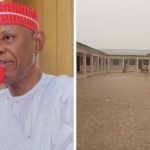
Highlights of the ceremony included the commissioning of a newly constructed female postgraduate hostel and the presentation of awards to the Deputy Senate President by students’ bodies in recognition of his contributions to educational development in the country.
Jibrin also congratulated the graduating students and urged them to uphold democratic values and contribute meaningfully to Nigeria’s democratic consolidation.
“Democracy is not sustained by institutions alone, but by enlightened citizens and principled leaders,” he said.
