


Gloria Robert, Abuja
The Nigerian Institute of Public Relations (NIPR) has defended the Federal Government’s decision to engage lobbying services in the United States, insisting that the move is a legitimate public relations practice and does not constitute a criminal act.
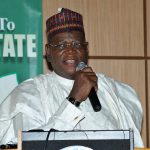
The clarification was made on Thursday by the NIPR President, Dr. Ike Neliaku, during the official presentation of the First Nigeria Reputation Perception Index Report 2025 at the National Assembly Complex, Abuja.
Dr. Neliaku spoke against sustained criticism by opposition parties and civil society groups over the President Bola Tinubu administration’s approval of a $9 million contract for lobbying in the US, which critics argued was misplaced at a time Nigerians are facing rising insecurity, inflation, and economic hardship.
He said, “Many are asking why we should hire lobbyists. Lobbying is a public relations function. So it is not a criminal thing to do. But the important thing is that those we are hiring to lobby for us will soon be coming here from 126 countries for the World Public Relations Forum 2026, and that is the greatest lobby we can do.”
Dr. Neliaku added that Nigeria stands to benefit more from direct engagement and exposure than conventional image management abroad. He stressed that global perceptions of Nigeria are often shaped by elite narratives amplified through international media rather than the realities experienced by ordinary citizens.
He explained, “Reputation is governed by the elite, while realities are controlled by ordinary people. So while ordinary people are happy with Nigerians, saying your country is wonderful and blessed, the elite that have access to the media will continue to paint a picture of a programmed nation.”
According to him, Nigeria’s greatest asset lies in its human capital, both at home and in the diaspora. “So when you are painted as a Country of Particular Concern, understand where it is coming from. The greatest asset of Nigeria is its people. That we have not been able to convert this asset into capital is a different thing entirely,” he said.
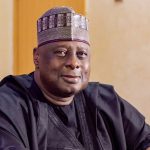
Also speaking at the event, the Deputy President of the Senate, Senator Jibrin Barau, described national reputation as a strategic asset rather than mere propaganda. He commended the development of a data-driven framework for assessing Nigeria’s image across key sectors.
Senator Barau said, “In today’s interconnected world, national reputation is no longer a matter of sentiment or propaganda; it is a strategic asset. The National Assembly, as the custodian of the people’s mandate, requires credible data and independent insights to effectively discharge its responsibilities of lawmaking, oversight, and representation. Evidence-based reports such as this empower legislators to draft responsive laws, strengthen institutional frameworks, and demand accountability where it matters most.”
He added, “Reputation is ultimately built from lived realities. It is shaped by the quality of leadership, the integrity of institutions, the consistency of public policies, and the everyday experiences of citizens.”
Meanwhile, the President of the Association of Retired Career Ambassadors of Nigeria, Joe Keshi, warned against confusing public relations with propaganda, noting that Nigeria’s global image has suffered setbacks in recent years.
Keshi said, “There is a difference between public relations and propaganda. Nigeria’s global reputation is on the decline. A nation’s reputation is one of its most valuable, yet intangible assets, influencing governments, investors, businesses, tourists, and international communities.”
He also lamented Nigeria’s reduced diplomatic leverage, citing actions such as the US designation of Nigeria as a Country of Particular Concern. “Regrettably, we are currently unable to respond effectively to any action from the United States, and you all know why,” he said.
Keshi stressed that while Nigeria possesses strong cultural and innovative influence, leadership and governance remain decisive. “If you do not have good leadership and good governance, this country will continue to be in crisis. We need strategic policy coherence and institutional reforms. And that’s very critical for the survival of this nation,” he concluded.
