



By Yusuf Maitama Imam & Nazir M. Suleiman
Economic reforms are often presented to citizens as inevitable, framed not as a matter of choice but as the only rational path forward. In Nigeria, as in many countries, such reforms are sold with promises of a better tomorrow, while the immediate hardships they impose are justified as necessary sacrifices. Yet, the very language used to describe these reforms can obscure who benefits, who bears the cost, and whether alternatives exist at all.
Citizens are frequently asked to endure higher taxes, reduced subsidies, or tighter regulations, with dissent dismissed as impractical, emotional, or uninformed. In this way, reform becomes persuasive not through open debate or public understanding, but through carefully crafted language that closes off scrutiny and limits meaningful participation.
Two thinkers offer insight into this dynamic. Historian Walter Rodney demonstrated that underdevelopment is not accidental but systematically produced through structures of power that advantage some while burdening others. Meanwhile, George Orwell, writing from a different perspective, warned that political language is often designed to make such power arrangements appear reasonable. Where Rodney exposes the material foundations of inequality, Orwell reveals how words can soften, justify, and normalize them. Together, they illuminate how policy and rhetoric often work hand in hand to sustain power.
This interplay of language and governance is evident in contemporary Nigeria, where communication increasingly substitutes for accountability. Phrases like “economic growth,” “stability,” “reform,” and “shared sacrifice” are repeated until they sound self-evident. Yet these abstractions frequently conceal more than they clarify. Who truly bears the burden of reform? Who benefits first, and who waits indefinitely? These questions are rarely addressed openly, not because they lack importance, but because the language of reform is designed to sidestep them.
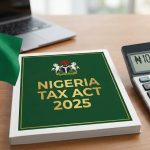
A striking example is Nigeria’s recent tax reform debate. When consulting firm KPMG raised concerns about the new tax laws, the Presidential Fiscal Policy and Tax Reforms Committee did not engage with the critique on social or distributive grounds. Instead, the concerns were reframed as “misunderstandings of policy intent” or “mischaracterizations of deliberate policy choices.” Critique was linguistically repositioned as error, and disagreement was presented as mere preference rather than substantive debate.
At the same time, officials highlighted broad promises of tax simplification, increased investor confidence, and economic growth, while leaving critical questions unanswered. How would these reforms affect ordinary Nigerians’ purchasing power? What impact would they have on food prices or access to essential services? By relying on technical language and macroeconomic indicators, public debate is redirected away from lived experiences. Growth becomes the metric of success, endurance becomes civic virtue, and dissent is reframed as resistance to progress.
In this context, communication becomes a tool for managing consent rather than fostering understanding. Reform is announced, sacrifice is demanded, and accountability is postponed. Governance risks becoming a performance rather than a practice. Orwell cautioned that corrupted language makes clear political thought impossible, while Rodney demonstrated that normalized inequality reproduces itself. For reforms to be meaningful, the discussion must move beyond slogans and ask the hard questions about outcomes, distribution, and responsibility.
Without such a shift, economic reform remains something citizens are asked to endure, not something they are invited to shape. True governance requires that the language of reform serve transparency, not obfuscation, and that citizens are empowered to hold leaders accountable for the promises that are made in their name.
