

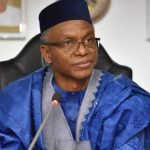


Investigative journalist Jaafar Jaafar has raised concerns over the proposed establishment of state police in Nigeria, warning that the country’s democratic institutions are not yet strong enough to prevent potential abuse.
In a statement posted on his verified social media platforms on Friday, Jaafar said he does not support the idea of state police, noting that Nigeria’s democratic culture remains fragile.
“I must confess that I do not support the idea of state police. Our democratic culture and institutions are still too fragile to sustain such a system without abuse,” he said.
Recalling the history of the Native Authority (NA) police during the First Republic, Jaafar said the force had become notorious for suppressing political opposition.
“Anyone familiar with the history of the brutality of the Native Authority police would naturally be wary of such a proposal,” he stated.
He explained that the NA police often served the interests of traditional authorities rather than the public.
“During the First Republic, the NA police became notorious for suppressing political opposition. Rather than serving the public, they often took orders from emirs and traditional chiefs, who used them to silence dissent and maintain political control,” he said.
Jaafar added that the memory of such abuses should serve as a cautionary tale.
“The memory of that abuse should caution us against repeating the same mistake under a different name. I think many proponents of provincial policing have not sufficiently reflected on the likely consequences,” he said.
The journalist expressed concern about the current use of the police by politicians, even under a centralized command.
“Even under the present arrangement, where the command structure of the police is centralized, the force is still frequently used to harass and intimidate citizens. Politicians often use the police to settle political scores, crush dissent, or silence critics,” he said.
He warned that the situation could worsen if police authority were devolved to state governors.
“If such abuses occur under a centralized command of the Inspector-General of Police, one can only imagine the consequences of devolving police authority to governors,” he said.
Jaafar further argued that the political space in many states is already dominated by incumbent governors who wield significant influence.
“In many states, the political space is already heavily dominated by incumbent governors, who control party structures, influence local institutions, and command enormous financial resources,” he added.
He cited the conduct of local government elections by state electoral bodies as a warning sign.
“A clear warning sign already exists in the way many State Independent Electoral Commissions conduct local government elections. Despite being labeled ‘independent,’ these bodies routinely deliver landslide victories to the ruling parties in their states,” he said.
Jaafar warned that allowing governors to control the police could endanger Nigeria’s democracy.
“Allowing governors to control the police would put democracy in grave jeopardy,” he said.
His comments come days after the Inspector-General of Police (IGP) Olatunji Disu inaugurated an eight-member committee for the implementation of state police.
Disu noted that the committee’s work is both significant and timely, aimed at ensuring that policing in Nigeria remains responsive to local realities.
“Across the nation, we continue to confront evolving security challenges. These require innovative thinking, strategic collaboration, and the willingness to explore reforms. This committee on state policing we are inaugurating today has a critical responsibility,” he said.
