



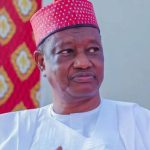
A former Chief of Army Staff, Tukur Buratai, has said he should not be held responsible for the non-release of names of individuals allegedly financing terrorism in Nigeria.
Buratai stated that although the financiers are known, they remain within the society.
Speaking on Politics Today, a programme on Channels Television, on Friday, the retired lieutenant general said relevant authorities are aware of those behind the funding but have reasons for not making their identities public.
“You cannot say I should be responsible for naming the financiers of terror.
“It’s not just about mentioning names; those agencies know why the names are not released. Action should be taken; these individuals are still within society today, and they are known. I take responsibility for certain things that are strictly the Nigerian Army’s responsibility,” he said.
Buratai also clarified that the decision to rehabilitate repentant members of Boko Haram was taken by the government, not the military.
“The initial concept that we had was that we gave them a timeline to surrender in 2016, and if they surrendered, we gave them a free passage and handed them over to appropriate agencies to rehabilitate them,” he added.
The former ambassador expressed concern over Nigeria’s security challenges and called for stronger intelligence gathering to tackle terrorism and related threats.
He also urged the government to recruit more security personnel to improve safety across the country.
Calls for the disclosure of terrorism financiers have persisted over the years, especially following assurances by the Federal Government that those backing insurgency would be exposed and prosecuted.
In 2021, the Federal Government announced that it had identified several individuals and entities allegedly funding terrorist groups, raising public expectations that their names would be made public.
The Nigerian Financial Intelligence Unit had also indicated that it tracked suspicious financial flows linked to terrorism, while security agencies intensified investigations into funding networks supporting insurgent activities.
However, the identities of the alleged financiers have largely remained undisclosed, drawing criticism from civil society groups and security analysts who argue that transparency is crucial to ending impunity.
Nigeria has battled insurgency in the North-East for over a decade, with Boko Haram and its splinter factions responsible for thousands of deaths and widespread displacement.
