





Pulse Nigeria has issued a public apology and clarification following backlash over its earlier report alleging that the Kano State Government distributed underwear to women as empowerment materials.
The platform had initially published a report with a headline suggesting that the state government was responsible for distributing branded underwear, a claim that triggered criticism, ridicule and political debate on social media.
In response, the Kano Development Forum, in a correspondence signed by its General Secretary, Nworisa Michael, demanded the immediate removal of the report and a public clarification, describing the publication as misleading and damaging to the image of Kano State and its government.
Following the intervention, Pulse Nigeria deleted the original post and later issued an official statement acknowledging lapses in its report.
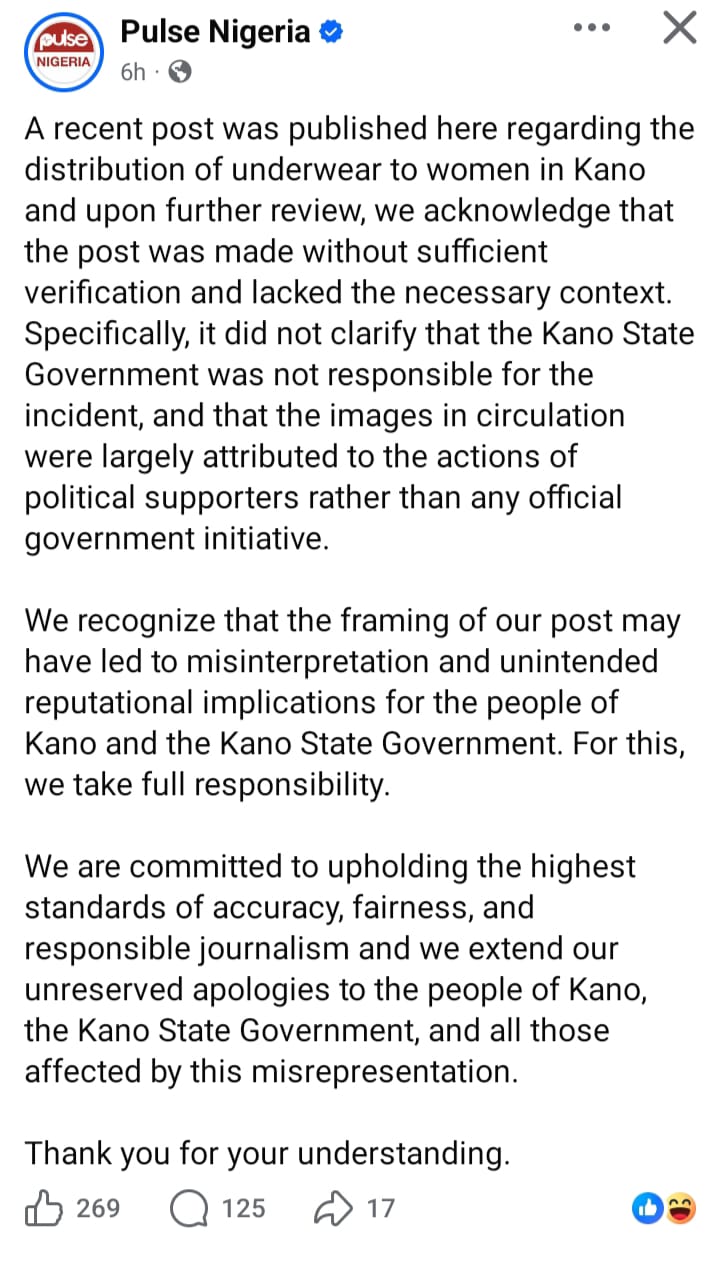
The platform admitted that the publication lacked sufficient verification and failed to provide proper context, noting that the Kano State Government was not responsible for the incident.
Pulse Nigeria further clarified that the images circulating online were largely linked to the actions of political supporters rather than any official government initiative.
“We recognize that the framing of our post may have led to misinterpretation and unintended reputational implications for the people of Kano and the Kano State Government. For this, we take full responsibility,” the statement read.
The platform also extended what it described as “unreserved apologies” to the people of Kano, the state government and others affected by the report.
Reacting, the Kano Development Forum described the clarification as a necessary step towards accountability, stressing that the rush to publish unverified reports continues to undermine media credibility.
The controversy stemmed from images of women displaying red underwear during an APC event to welcome the First Lady, Oluremi Tinubu, to Kano.
The images were subsequently circulated online, with some edited versions falsely portraying the display as a government-backed empowerment programme.
Residents said the development was rooted more in political symbolism and the actions of supporters than any formal policy of the state government.
The forum maintained that while public criticism of the display may be justified, attributing it to an official government programme was misleading and required correction.
