


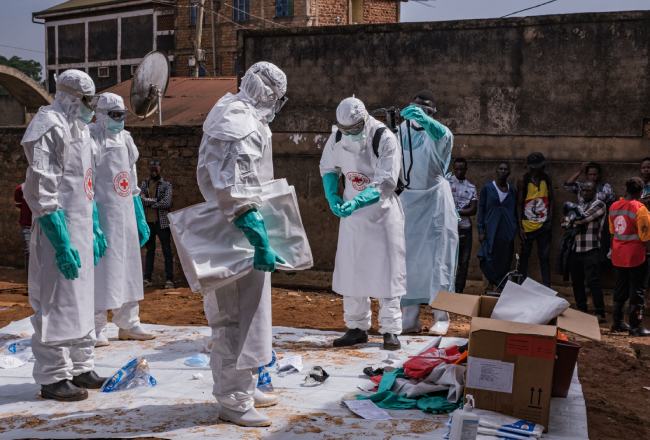
The Nigeria Centre for Disease Control and Prevention, NCDC, has placed Lagos, the Federal Capital Territory, FCT, Kano, Rivers and several other states on high alert over the possible importation of the deadly Bundibugyo strain of Ebola Virus Disease into Nigeria.
The agency disclosed this in a fresh public health advisory issued to Commissioners for Health across the 36 states and the FCT.
According to the NCDC, Nigeria currently faces a high risk of importing the virus due to the ongoing Ebola outbreak in parts of the Democratic Republic of Congo and Uganda.
The alert followed the decision of the World Health Organisation, WHO, to classify the outbreak as a Public Health Emergency of International Concern, PHEIC, prompting Nigerian authorities to strengthen nationwide preparedness measures.
Although no Ebola case has been confirmed in Nigeria, the agency said a joint Dynamic Risk Assessment conducted with partners showed that regional transmission, increased international travel, porous borders, informal crossings and trade activities across West and Central Africa have heightened the risk of the disease entering the country.
The NCDC revealed that over 1,000 suspected cases and 247 deaths linked to the outbreak had already been recorded in Congo and Uganda, with a fatality rate estimated at 24.6 per cent.
“The overall risk of importation of the disease into Nigeria has been assessed as HIGH due to increasing ongoing regional transmission, international travel, regional population movement, major airports, seaports, porous land borders, informal crossings and trade routes,” the agency stated.
The NCDC identified Lagos, FCT, Rivers, Kano, Enugu, Borno, Akwa Ibom, Cross River, Taraba and Adamawa as high-risk states because of their strategic transport hubs, airports, seaports and border activities.
It said while all states are expected to maintain Ebola preparedness, those classified as high-risk must urgently strengthen surveillance systems, laboratory capacity, isolation centres and emergency response mechanisms.
The agency explained that the Bundibugyo strain currently has no approved vaccine or targeted treatment, making early detection and strict public health measures critical in preventing an outbreak.
It further clarified that existing Ebola vaccines and monoclonal antibody therapies are mainly designed for the Zaire strain and may not provide protection against the current outbreak.
According to the advisory, Ebola is not airborne but spreads through direct contact with infected blood, body fluids, contaminated materials or infected animals.
The NCDC urged health workers across the country to remain vigilant, noting that early symptoms of Ebola often resemble malaria, Lassa fever and other common illnesses.
“Health workers must not wait for bleeding before suspecting Ebola in any patient with compatible symptoms and relevant travel or exposure history,” the advisory warned.
Symptoms listed by the agency include fever, fatigue, muscle pain, headache, vomiting, diarrhoea, abdominal pain, rash, hiccups and unexplained bleeding.
The NCDC also disclosed that its National Emergency Operations Centre had already been activated in alert mode to coordinate preparedness efforts at federal and state levels.
State governments were directed to ensure operational readiness in both public and private health facilities, including the activation of contact tracing systems, isolation units and protective measures for healthcare workers.
The agency added that preparedness efforts would focus on rapid detection, immediate isolation, supportive care, infection prevention and control, safe handling of laboratory samples and effective public communication.
The NCDC assured Nigerians that it was working with state governments and international development partners to strengthen national preparedness and prevent any possible outbreak or community transmission of the disease.
It, however, warned that sustained vigilance, rapid response and adequate funding would be critical in containing any potential Ebola threat in the country.