

The Kano State Government, through the Ministry of Justice, in partnership with UNICEF, has developed a Standard Operating Procedure (SOP) on child justice, diversion and accountability to strengthen the administration of child justice in the state.
The SOP was developed during a two-day technical workshop organised under the Justice for Children (J4C) Programme with support from UNICEF. The workshop was themed, “Strengthening Child Justice through Diversion, Coordination and Accountability in Kano State.”
Speaking at the workshop, UNICEF Child Protection Specialist at the Kano Field Office, Fatima Adamu, said the SOP would provide a clear operational framework for justice sector institutions handling cases involving children in conflict with the law.
She explained that the Kano State Child Protection Law 2023 introduced diversion as an alternative to prosecuting children accused of minor offences, in line with global best practices.
According to her, restorative justice offers children the opportunity for rehabilitation, reintegration and community-based support instead of detention.
“We want children who commit minor offences to undergo rehabilitation, reintegration and community-based support instead of detention where they may become hardened criminals.
“Diversion gives children another opportunity to become responsible adults and productive citizens.
“The SOP will serve as a guide for justice sector actors and will be institutionalised as a state reference document for child justice administration,” she said.
Adamu added that UNICEF would continue to provide technical assistance, capacity building and institutional support to strengthen child protection systems in Kano.
She noted that the organisation had trained magistrates, Sharia court judges, social workers and other justice sector stakeholders while supporting coordination on child protection and gender-based violence response.
Also speaking, UNICEF Consultant, Idris Bawa, said the proposed SOP would improve coordination, accountability and child justice administration among institutions responsible for child protection.
Presenting a paper titled “Child Justice and Diversion in Nigeria: Policy, Legal and Institutional Framework,” Bawa advocated a child rights-based approach, stressing the importance of child-friendly justice, rehabilitation, restorative justice, family reunification and non-discrimination.
The Kano State Attorney-General and Commissioner for Justice, Abdulkarim Kabiru-Maude (SAN), described the workshop as timely, saying the implementation of the SOP would strengthen the protection of children’s rights and reduce unnecessary prosecution of minors.
“The objective is to ensure children are protected from molestation, harassment and exploitation throughout the justice process.
“What we need after developing this document is effective implementation. If all stakeholders carry out their responsibilities, Kano will have a more peaceful society that respects the rights and dignity of every child.
“Protecting the rights and welfare of children remains a key priority under the administration of Governor Abba Kabir-Yusuf,” he said.
Kabiru-Maude commended UNICEF for its sustained support in strengthening child protection legislation and institutions in the state, reaffirming the government’s commitment to promoting diversion, rehabilitation, accountability and the best interests of every child.
Also speaking, the Emir of Kano, Muhammadu Sanusi II, described the development of the SOP as a significant milestone towards the effective implementation of the Kano Child Protection Law 2023.
Represented by the Walin Kano, Mahe Bashir-Wali, the Emir said the modern criminal justice system should prioritise correction and rehabilitation over punishment, particularly for children.
“This framework will help divert vulnerable children from criminality and redirect them towards productive lives,” he said.
He also urged traditional institutions to continue working with the government to promote awareness and implementation of child protection laws at the community level.
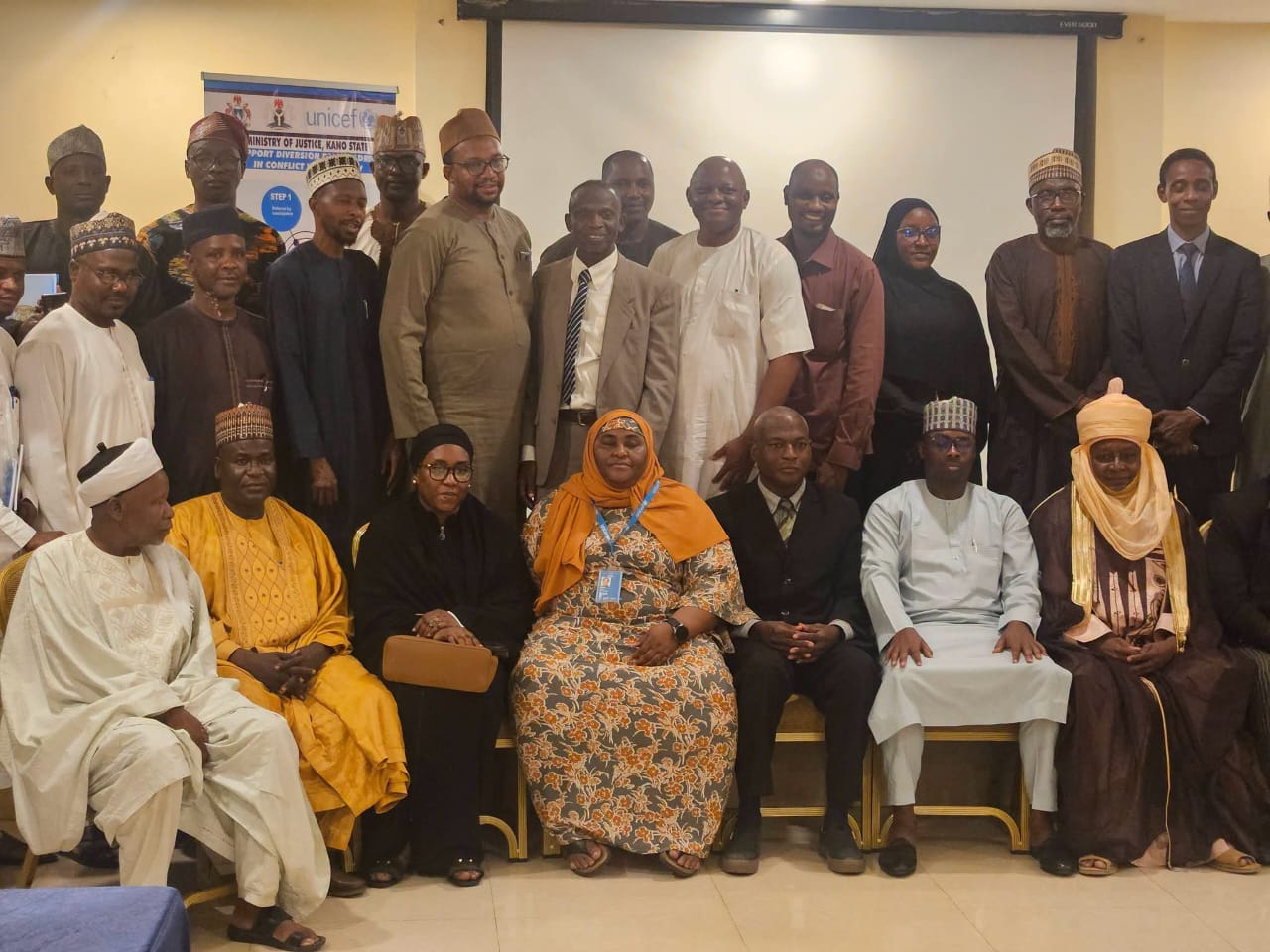
The workshop attracted judges, magistrates, police officers, legal practitioners, officials of the Ministry of Women Affairs, Hisbah, traditional and religious leaders, civil society organisations and development partners.