

The Presidency on Sunday declared that the worst phase of Nigeria’s economic reforms had passed, insisting that President Bola Tinubu’s policies were beginning to yield results, as it rejected former Vice President Atiku Abubakar’s criticism of the administration’s economic management.
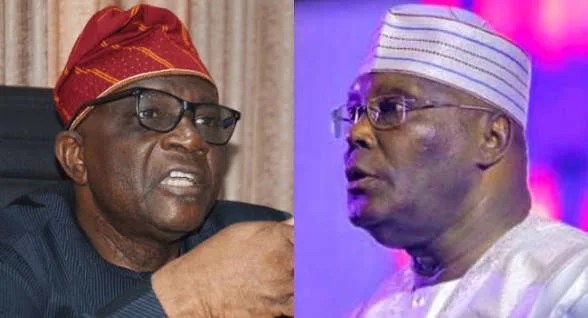
Responding to Atiku’s recent remarks on government borrowing, fuel subsidy removal, tax reforms, and the alleged oil revenue windfall, the Special Adviser to the President on Information and Strategy, Bayo Onanuga, said the opposition leader’s arguments were based on outdated data and failed to reflect the country’s current economic realities.
In a statement titled “Facts, Not Fear: A Point-by-Point Response to Atiku Abubakar on Nigeria’s Reform Journey,” Onanuga argued that assessing the administration’s reforms using 2024 figures ignored the progress made since then.
“A debate anchored in 2024 cannot explain Nigeria in 2026,” he said, adding that “economies are dynamic. Reforms are processes, not events.”
According to him, Nigeria’s dollar-denominated Gross Domestic Product (GDP) recovered from about $253 billion after the 2024 exchange rate adjustment to approximately $377 billion, while the country’s naira GDP increased from about ₦314 trillion to ₦530 trillion.
On borrowing, Onanuga maintained that Nigeria was not over-borrowed, saying debt sustainability should be assessed alongside the country’s economic capacity and revenue generation.
“Nigeria is certainly not over-borrowed,” he said, noting that the country’s debt-to-GDP ratio remained at about 40 per cent, while the debt service-to-revenue ratio had fallen from nearly 100 per cent in December 2022 to less than 60 per cent.
The presidential spokesman also dismissed Atiku’s claim that the Federal Government had realised an oil revenue windfall of ₦7.98 trillion.
“There is no such windfall as ₦7.98 trillion,” Onanuga said, arguing that the calculation ignored lower-than-projected crude oil production, production costs, and crude-backed loan obligations.