





“I cannot teach anybody anything; I can only make them think.” — Socrates
Socrates, the ancient Greek philosopher, profoundly influenced philosophical thought through questioning, dialogue, and the critical examination of assumptions. His assertion that the unexamined life is not worth living captures the importance of intellectual curiosity and independent thinking. His influence on Plato, whose contributions shaped subsequent philosophical traditions, remains immeasurable. Alfred North Whitehead famously observed in Process and Reality that the European philosophical tradition consists of a series of footnotes to Plato.
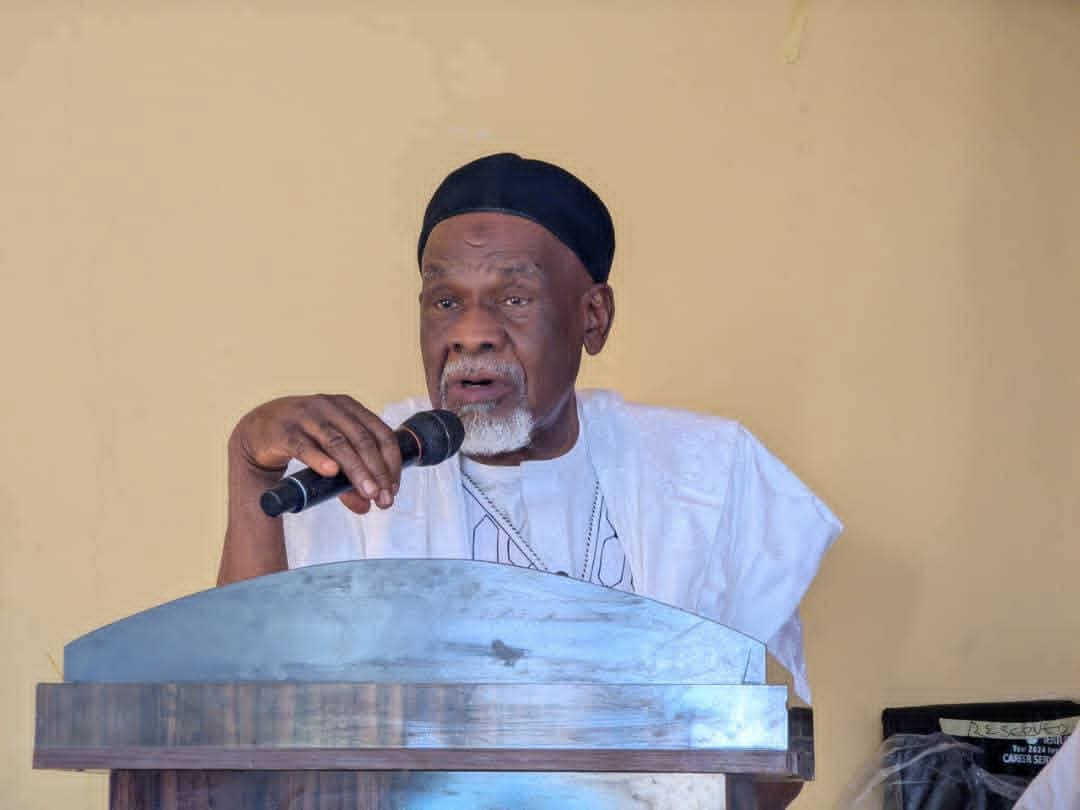
The Socratic tradition reminds us that education transcends the transmission of information; it cultivates the capacity to question, investigate, and think independently. This philosophy brings to mind Malam Ibrahim Muazzam, who taught at Bayero University, Kano, for more than four decades. Like Socrates, he demonstrates that the true purpose of teaching is not merely to provide answers but to inspire the intellectual curiosity necessary to discover them.
I first encountered Malam Muazzam in 2008, when we were second-year undergraduate students. He taught us Political Ideas, an important course in Political Science. One day, as we waited in the lecture hall, a tall, imposing gentleman appeared at the doorway and glanced at his wristwatch. He was waiting for the scheduled time.
My friend leaned towards me and whispered, “That is Ibrahim Muazzam. He waits for the time.”
Precisely at the appointed hour, he entered and began his lecture. His punctuality communicated a powerful lesson about discipline, professionalism, and respect for others. Throughout our university years, this commitment remained consistent, leaving an enduring impression on me.
Malam Muazzam is an exceptional teacher whose mastery of his subjects enables him to explain complex philosophical ideas with remarkable clarity and precision. He makes difficult concepts accessible without diminishing their intellectual depth.
After graduating in 2012, I returned to the university for postgraduate studies. Inspired by visits to Mambayya House, particularly the Malam Aminu Kano Living History Museum, I became interested in studying Aminu Kano beyond his familiar identity as a politician. I wanted to understand him as a thinker whose political activities were informed by a distinctive philosophical outlook. Consequently, I decided to research the philosophy of Malam Aminu Kano.
When postgraduate students were invited to indicate their preferred supervisors, three encounters strengthened my determination to approach Malam Muazzam.
First, my colleague Zainab Sanusi, who was under his supervision, encouraged me to choose him, explaining, “He will always be available for you.” Her words proved remarkably accurate.
Second, Professor Mahmud M. Lawan, who subsequently became my mentor, listened to my research idea and declared, “As long as you are doing philosophy, there is no one like Muazzam.”
Third, I approached Malam M. M. Yusuf, whose intellectual influence continues to inspire me. When I explained my intention to study Aminu Kano’s philosophy, he simply pointed towards Malam Muazzam’s office.
These encounters reminded me of Plato’s account in Apology, in which Socrates’ friend Chaerephon consulted the Oracle at Delphi to find out whether anyone was wiser than Socrates. The oracle declared that no one was wiser. In my experience, the repeated recommendations of respected scholars similarly reinforced my confidence in Malam Muazzam’s intellectual capacity.
I eventually approached his office and said, “Sir, I want you to supervise me.”
He asked about my topic. When I answered, “The Philosophy of Malam Aminu Kano,” he smiled and agreed. Thus began an academic relationship that profoundly shaped my intellectual development.
I submitted chapters of my research, which he carefully read, annotated, and returned for corrections. He was consistently accessible and generous with his time. Occasionally, he arrived with books and encouraged me to consult them for my research.
One remarkable feature of his supervision was his reluctance to provide immediate answers to every question. Instead, he often recommended relevant literature, allowing me to investigate issues and develop my own understanding. I eventually realised that this was deliberate: he was cultivating intellectual independence, patience, and the discipline of serious inquiry.
I vividly remember asking him about the debate between rationalism and empiricism. Rather than offer a lengthy explanation, he retrieved works by John Locke, David Hume, and George Berkeley and handed them to me, saying, “Go and read this.”
That response embodied his philosophy of teaching. He understood that genuine learning begins when students are encouraged to read, question, reflect, and investigate independently.
At the end of many chapters, he recommended additional reading. Sometimes, he wrote a brief note on my manuscript: “See me for discussion.” These invitations led to stimulating conversations in which he challenged my assumptions, broadened my perspective, and encouraged deeper analysis. Although he did not always speak at length, his contributions reflected profound knowledge and experience.
I recall accompanying a friend to Professor Abubakar Rashid’s residence, where our conversation turned to Malam Aminu Kano. As I explained my research, Professor Rashid asked about my supervisor. When I mentioned Malam Muazzam, he smiled and remarked in Hausa, “Lallai ka sha aiki,” suggesting that I had undertaken demanding intellectual work.
Looking back, I appreciate the significance of that observation. Exploring the philosophy of a complex political thinker under a scholar of Malam Muazzam’s intellectual depth required extensive reading, sustained reflection, and rigorous analysis.
His knowledge encompasses diverse philosophical traditions, including Islamic and Western philosophy. His command of these intellectual worlds reflects not only extensive reading but also a profound appreciation of their historical contexts, arguments, and enduring questions. He does not merely introduce students to philosophers; he challenges them to engage critically with their ideas.
The Quest for Philosophical Understanding: Essays in Honour of Malam Ibrahim Muazzam, whose planning and compilation committee I had the privilege of serving on, appropriately celebrates his intellectual contributions. Bringing together essays on philosophy and political thought, the volume honours his distinguished scholarship, decades of teaching, and commitment to intellectual inquiry.
My experiences with Malam Muazzam have taught me that the true measure of a teacher lies not simply in the information imparted but in the quality of thought inspired. An exceptional teacher equips students to ask meaningful questions, examine assumptions, consult relevant literature, and pursue knowledge independently.
Socrates remains an enduring symbol of this intellectual tradition. In his distinctive way, Malam Ibrahim Muazzam embodies its essential principles. His punctuality, accessibility, intellectual breadth, and commitment to independent inquiry have profoundly influenced me. His legacy extends beyond lecture halls and individual research projects; it lives on in the habits of thought he cultivates and the generations of students he inspires.
I remain deeply grateful for the privilege of learning under his guidance. His mentorship reinforced my conviction that scholarship requires patience, discipline, humility, and a lifelong commitment to learning. Ultimately, education is not merely about arriving at conclusions but continually asking questions in pursuit of deeper understanding.
I pray that Almighty God preserves Malam Ibrahim Muazzam in good health, blesses his family, and grants him many more fulfilling years. May our society continue to benefit from scholars of his calibre, whose lives remind us that education is not simply the acquisition of knowledge but the cultivation of wisdom.
Yusuf Musa writes from the Department of Political Science, Baba-Ahmed University, Kano.