

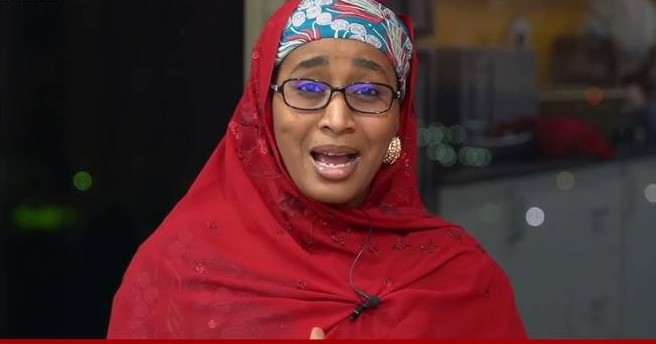
Allegations of workplace harassment and bullying within the BBC Hausa Service have sparked public outrage after former staff members, including senior journalist Halima Umar Saleh, shared disturbing experiences from their time at the organization.
Halima, now a Senior Digital Editor at TRT Afrika, broke her silence in a recent interview with AREWA24, where she detailed how she endured sustained harassment from an unnamed male colleague during her nearly decade-long career at BBC Hausa.
She described the experience as one of the most painful moments in her professional life.
“There is someone—I don’t even know what I did to him—but he really hated me for no reason,” Halima recounted. “He threatened to get me expelled from BBC Hausa and kept harassing me constantly. I asked him, ‘What have I done wrong?’ He admitted that I hadn’t done anything wrong. He even said I was doing my job well.”
She recalled that the final threat came just two days before Ramadan. “I prayed to Almighty Allah not to let anyone humiliate me. Ramadan started in May, and by September, I received an invitation from TRT World via LinkedIn,” she said.
Halima joined BBC Hausa as a Multimedia Journalist in December 2014 and rose to the position of Senior Digital Journalist before leaving in early 2023. When asked whether she would consider returning to the BBC, her answer was unequivocal: “No, no! If I move forward, I’ll never go back.”
The interview, which aired on AREWA24, was mysteriously removed shortly, prompting more questions than answers.
Her revelations triggered an outpouring of support from other former BBC Hausa staff who said they also suffered similar or worse treatment at the hands of the same colleague.
Jabeer Mustapha Sambo, a former BBC Hausa employee, confirmed Halima’s claims, saying, “What Halima said on AREWA24 about harassment and bullying at BBC Hausa is completely true. I personally experienced abuse from the same man. What I went through was even worse than what Halima and Sani Aliyu faced.”
“I fell into depression,” Sambo continued. “I couldn’t eat or sleep because I dreaded going to the office. That man became like a monster to me. It got to a point where I gave up and resigned. Even if I had to walk around naked, I knew I’d never work for the BBC again.”
Another former BBC journalist, Mo Sani Aliyu, corroborated the toxic work culture, stating, “The person Halima spoke about is still there, continuing his behavior unchecked. I resigned too because the environment was no longer safe. There is an urgent need to investigate BBC Hausa.”
Fauzia Tukur, a BBC staffer, questioned the deletion of the AREWA24 interview: “The time has come for attention to shift to the condition of workers at this media organization. Why was the video taken down? Does this suggest that Halima’s complaints were true? Enough is enough.”
Calls for accountability have extended beyond the newsroom. Dr. Muhsin Ibrahim, a lecturer at the University of Cologne in Germany, weighed in: “If Halima had said this on a British platform, the BBC would have begun an investigation. People, especially women, should not be harassed at work. Justice must prevail.”
Under UK law, workplace harassment is illegal, especially if tied to protected characteristics like sex or race, under the Equality Act 2010.
While Nigeria lacks a dedicated law addressing workplace harassment, its constitution protects citizens’ rights to dignity and freedom from discrimination. Legal redress can be sought through the National Industrial Court.
Despite the BBC’s global reputation for journalistic integrity, these allegations expose a troubling internal culture within its Hausa Service bureau in Nigeria.
Journalists and critics are now calling for an independent probe into the claims, warning that failure to act could further endanger journalists—particularly women—working within the organization.
As one former staffer put it, “Everyone who works there knows it’s a deeply toxic environment. That man could bully you openly and nothing would happen. It became the norm.”
With mounting testimonies and growing public pressure, the question now is whether the BBC will act—or continue to remain silent.