


President Bola Tinubu has directed Nigeria’s financial and capital market authorities to intensify oversight of stablecoins and digital currencies, warning that the rapid migration from traditional banking to new digital payment systems presents both risks and opportunities for Africa’s largest economy.
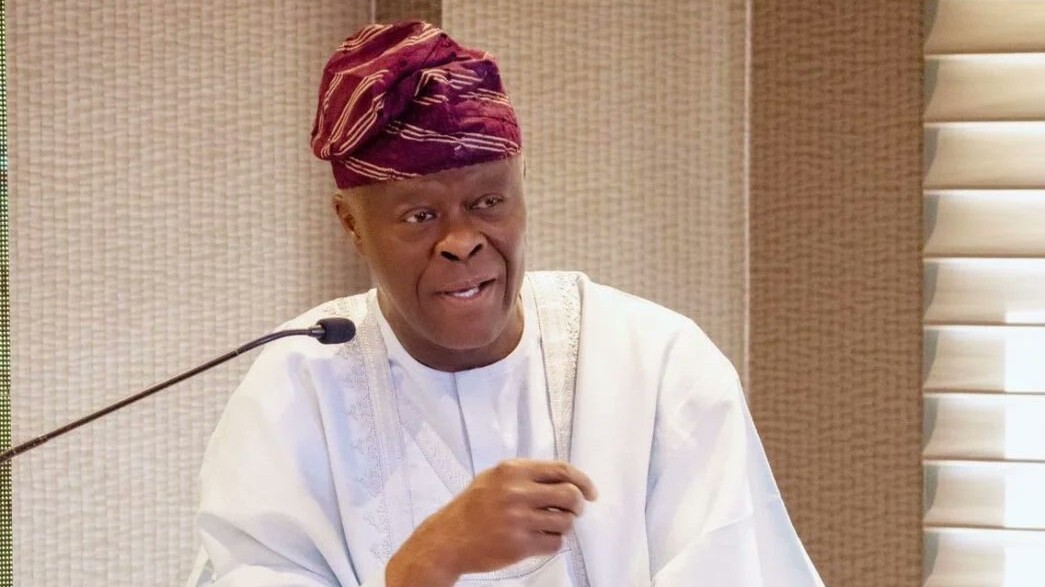
Speaking at the 18th Annual Banking and Finance Conference of the Chartered Institute of Bankers of Nigeria in Abuja on Tuesday, Mr. Tinubu — represented by Finance Minister Wale Edun — described the shift as part of a global “digital revolution” that requires proactive regulation.
“So many people now are not using the banking system to make payments,” he said. “They’ve turned to stablecoin. They’ve turned to digital currency. To this end, I have directed capital market authorities and banking authorities to get hold of this narrative and track it whilst it is still evolving.”
The remarks come amid Nigeria’s growing efforts to regulate digital finance. Earlier this year, the Securities and Exchange Commission began enforcing the Investment and Securities Act 2025, which formally designates digital assets as securities and brings exchanges and custodians under a new licensing regime.
The law also imposes stricter anti-money-laundering safeguards on Virtual Asset Service Providers, underscoring Nigeria’s attempt to balance financial innovation with systemic stability.
Mr. Tinubu argued that while Nigeria’s GDP continues to grow, the country’s industrial base remains weak, unable to generate sufficient employment for its fast-expanding population. He called for the adoption of digital tools, artificial intelligence, and open banking to improve productivity and spur job creation.
“Our young population is an asset,” he said. “By 2050, Nigeria will provide the largest workforce in the world. That is why we are making investments in education, infrastructure, and digital skills to prepare our youth for the opportunities of tomorrow.”
The president also pointed to tax reforms and tighter fiscal controls as part of his administration’s strategy to increase revenue and restore confidence in government finances. Linking government accounts directly to the Central Bank of Nigeria, he said, would give officials “full visibility” and “lead to increased revenues.”
At the conference, Central Bank Governor Olayemi Cardoso announced a plan to attract \$1 billion a month in diaspora remittances by 2026, a target he described as “transformative” for Nigeria’s foreign exchange reserves. “When we started that journey, we were at $250 million a month. Now we are at $600 million,” he said, citing collaborations with commercial banks to rebuild trust among Nigerians abroad.
The meeting also highlighted recent gains in private-sector lending, capital raising, and non-oil exports, according to Prof. Pius Olanrewaju, president of the Chartered Institute of Bankers.
He noted that Nigerian banks have raised more than ₦2.5 trillion in capital since 2024, while exports of non-oil products expanded nearly 20 percent year-on-year in the first half of 2025.
Despite these signs of progress, participants agreed that Nigeria faces a decisive moment. Whether it can harness digital innovation and regulatory reform to broaden economic inclusion and create jobs for its young citizens will determine if the country can turn resilience into reinvention.
“Those that innovate, that reform, that collaborate, will thrive,” Mr. Tinubu said. “This is the path that Nigeria is firmly committed to.”