

By Sufyan Lawal Kabo
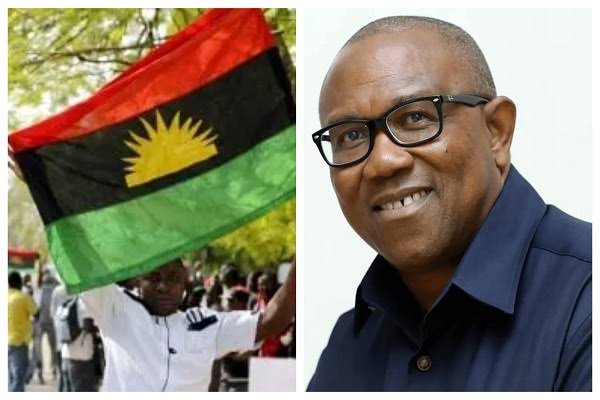
The writing is clearly on the wall: Peter Obi’s repeated defence of, and apparent sympathy for, the Indigenous People of Biafra (IPOB) has raised concerns among many Nigerians about the implications for the country’s unity and stability. His posture has fueled suspicions among critics who believe it reflects a broader political agenda linked to separatist aspirations in the Southeast. For these critics, no true nationalist should be perceived as defending or associating with a group whose activities have been accused of threatening national peace, security, and coexistence.
As Nigeria gradually moves toward another electoral season, many citizens are beginning to critically re-examine the political movement built around Peter Obi and the Obidient ideology. While his supporters present him as a symbol of change, many Nigerians, especially in the North and parts of the Southwest, remain concerned about the political tension and division that often accompany discussions surrounding his movement.
One of the major concerns repeatedly raised against Obi is his perceived position regarding IPOB. The Indigenous People of Biafra was declared a terrorist organisation by the Nigerian military on September 15, 2017. Various federal authorities defended that designation on the basis of security concerns and separatist activities.
However, over the years, critics have accused Obi of being too soft on IPOB and of failing to clearly distance himself from separatist sentiments. This has continued to generate suspicion among many Nigerians who believe that national unity must remain non-negotiable.
Another issue that generated strong reactions during the 2023 election was Obi’s repeated use of the slogan “Take Back Your Country” during campaign appearances, particularly in churches. At several events, he told worshippers that it was time to “take back the country,” a phrase that critics argue promoted resentment and emotional hostility toward existing institutions. Many observers also noted that the slogan gained significant traction within highly charged religious gatherings and church-based mobilisations during the campaign period.
For a country already grappling with ethnic and religious fault lines, many Nigerians feared that such rhetoric could deepen divisions rather than promote unity.
Equally controversial was Obi’s 2023 campaign visit to Kano State. Political observers noted that much of his engagement in Kano was concentrated around Sabon Gari, an area historically populated by many Igbo traders and residents. Critics argue that a presidential candidate seeking national unity should visibly engage broader indigenous communities across Kano rather than appearing politically comfortable only within ethnic strongholds. Many northern citizens interpreted the optics as politically insensitive and reflective of identity-based mobilisation.
Another worrying trend in recent times, according to some observers, is the increasing disrespect directed at northern historical leaders such as Sir Ahmadu Bello, the Sardauna of Sokoto, and Sir Abubakar Tafawa Balewa by some supporters of Obi, particularly on social media. These men remain foundational figures in Nigeria’s political history and symbols of northern leadership and sacrifice. Critics argue that social media platforms have increasingly become filled with insulting comments, revisionist attacks, and mockery directed at these late leaders.
While political disagreement is a normal feature of democracy, there is concern that a culture is emerging in which historical figures are demonised because of contemporary political disagreements. Such attacks, critics contend, are unhealthy for national unity and could negatively influence younger generations’ understanding of the sacrifices made by Nigeria’s founding fathers.
Many Nigerians are therefore beginning to ask difficult questions. Does Obi’s perceived sympathy toward IPOB raise concerns about his suitability for national leadership? Is the Obidient movement truly about national unity, or has it evolved into a platform driven largely by anger, online aggression, and ethnic sentiment? Can Nigeria withstand another cycle of highly emotional politics fueled by social media narratives and regional grievances?
The truth is that Nigeria needs reforms, competent leadership, and accountability. However, it also needs stability, unity, and mutual respect among all ethnic and religious groups. No political ambition should be allowed to inflame ethnic suspicion or deepen regional hostility.
As 2027 gradually approaches, Nigerians must be careful not to surrender the future of the country to emotional propaganda, social media pressure, or divisive political narratives. Leadership should unite Nigeria, not polarise it further.
Sufyan writes from Abuja. He can be reached at sefjamil3@gmail.com