


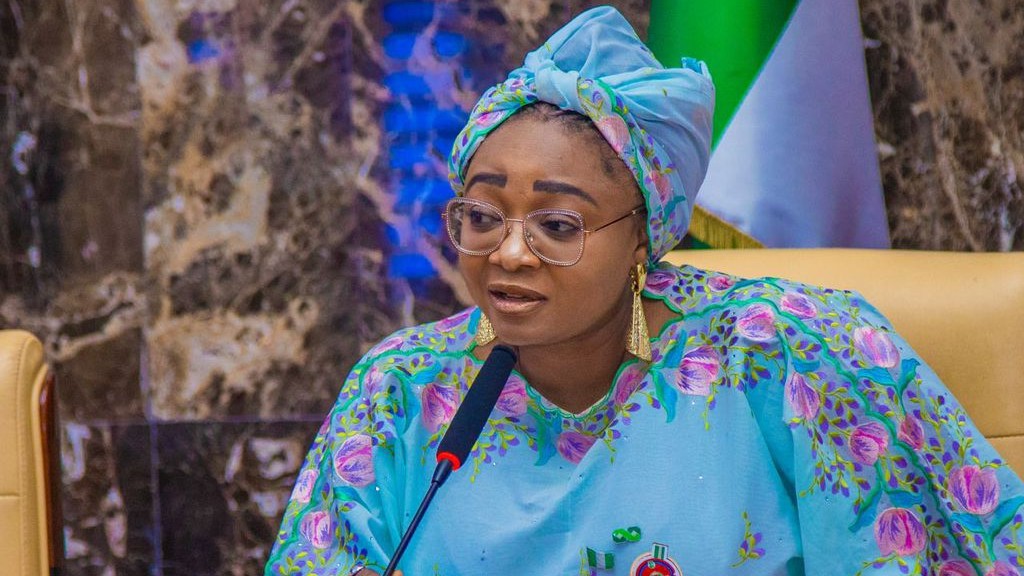
Imaan Sulaiman-Ibrahim, Minister of Women Affairs, says early marriage continues to hinder Nigeria’s development, with 44 per cent of girls married before the age of 18, and 18 per cent before turning 15.
She stated this during the 2025 International Day of the Girl Child (IDGC) celebration on Friday in Abuja, supported by Save the Children International (SCI) Nigeria and the Pink Up for Girls Initiative.
The minister described child marriage as a grave violation of human rights, stressing that it perpetuates poverty and inequality while depriving girls of education, a voice, and the opportunity to contribute meaningfully to society.
“In spite of progress, the statistics are distressing. According to UNICEF, 44 per cent of Nigerian girls marry before 18, and 18 per cent before 15. Each figure represents a dream deferred and potential lost,” she stated.
She said early marriage increases maternal mortality, deepens poverty, and weakens human capital, further stalling national progress and denying generations of girls the right to a better future.
Mrs Sulaiman-Ibrahim called for increased investment in safe education, mentorship, and empowerment, stressing that girls must be given the tools to thrive without fear or limitations in any environment.
“Beyond advocacy, we must build safe spaces at home, in schools, and online. Parents must protect, communities must reject harmful traditions, and religious leaders must act as moral guides,” she added.
The minister highlighted education as the most powerful tool to break the cycle of poverty, noting that an educated girl transforms not just her life but also that of her family, community, and the nation.
She urged girls to speak out against abuse, exploitation, and discrimination, saying they are the changemakers Nigeria needs for a future shaped by bold voices and fearless leadership.
“Your courage is needed on the front lines. Your brilliance can light up this nation. For the girl you are, you are the change we need,” she declared.
Duncan Harvey, Country Director of SCI, emphasised the importance of viewing girls as leaders and innovators, not merely as victims of challenges such as poverty, insecurity, and displacement.
He noted that despite these challenges, girls are rising as powerful advocates, designing community projects to end child marriage and improve access to education and healthcare in their communities.
Harvey reaffirmed SCI’s commitment to child rights and gender equality, adding that the organisation would continue to support girls to become active changemakers and leaders within their societies.
Also speaking, Bukky Maiye, CEO of Pink Up for Girls, called for sustained efforts to protect and empower girls, ensuring they reach their full potential across all sectors.
Mrs Maiye, represented by Ginika Ukoha, Abuja Chapter Lead of The Women International, said the group creates safe, transformative spaces for girls and women across Nigeria to grow and lead.
“We gather not out of pity, but purpose. Millions of girls still face early marriage, poverty, school dropout, and abuse. Yet, they are not just victims — they are future leaders,” she said.
Other highlights of the event included student presentations advocating girls’ rights to safety and education, as well as an award ceremony recognising exceptional young girls excelling in various fields.
A panel discussion titled “The Girl I Am, The Change I Lead” featured girls sharing how they are leading change, proving they can be active agents in transforming their communities and nation.
NAN