


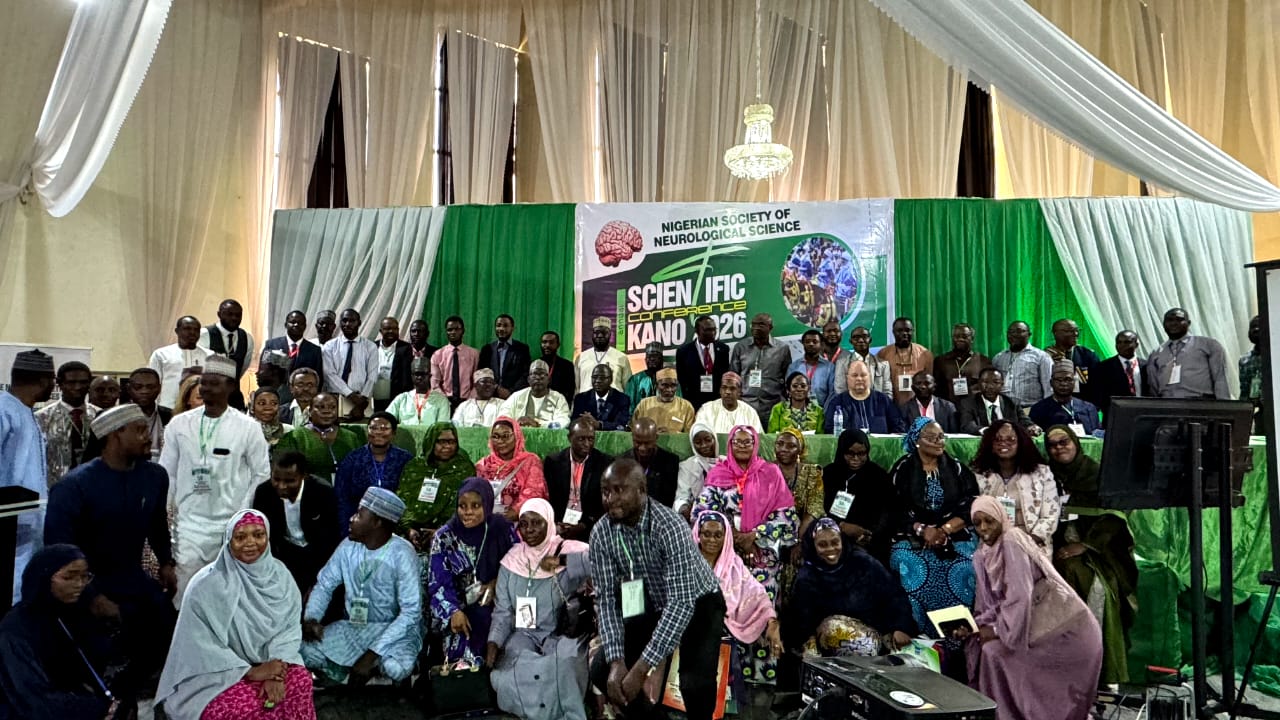
The Nigerian Society of Neurological Sciences (NSNS) has urged stakeholders to adopt proactive measures to bridge gaps in epilepsy care through innovation, integration, and interdisciplinary collaboration.
Prof. Morenikeji Komolafe, President of NSNS, made the call on Wednesday during the inauguration of the association’s 58th Annual Scientific Conference and General Meeting in Kano. The conference carries the theme: “Bridging Gaps in Epilepsy Care: Innovations, Integration and Interdisciplinary Collaboration.”
Describing the conference as timely, Komolafe noted that it aligns with the society’s vision to address epilepsy, “a common but highly stigmatised neurological disorder.” She said the event would provide a platform to discuss solutions for epilepsy care and other neurological conditions in Nigeria.
“Participants will also have opportunities to engage in scientific sessions and network with colleagues from Nigeria and the diaspora,” she added.
Komolafe commended the Kano State Government, Bayero University Kano (BUK), Aminu Kano University Teaching Hospital (AKTH), the Movement Disorders Society, and other partners for their support.
She also praised the local organising committee, led by Prof. Lukman Femi-Owolabi, for hosting the conference in Kano.
Prof. Femi-Owolabi described hosting the conference in Kano as a milestone for the society, emphasizing its commitment to inclusivity and strengthening neurological practice nationwide.
He said the scientific programme was designed to tackle contemporary challenges and innovations in neurology through plenary sessions, workshops, and research presentations.
Prof. Abdulrahman Sheshe, Chairman of the Medical Advisory Committee and Chief Medical Director of AKTH, represented by Prof. Suwaid Mohammed-Abba, noted that epilepsy remains a major public health challenge in Nigeria. He highlighted delays in diagnosis, treatment gaps, stigma, and limited access to specialized care as major hurdles for patients.
“The conference will promote practical solutions, innovation, and collaboration to strengthen neurological services, training, and research. Its outcomes will improve clinical practice, strengthen referral networks, and enhance the quality of life for patients living with epilepsy and other neurological disorders,” Sheshe said.
Prof. Musa Borodo added that epilepsy is widely misunderstood, particularly in developing countries. He called for improved diagnosis, treatment, and public awareness, especially among children and adolescents, stressing that early intervention enhances patients’ social and educational development.
Borodo also urged expanding access to surgical treatment for drug-resistant epilepsy and promoting affordable innovations.
Represented by Abubakar Labaran-Yusuf, Commissioner for Health, Kano State Governor Abba Kabir-Yusuf reaffirmed the state’s commitment to healthcare improvement.
Labaran-Yusuf said the government had upgraded 18 primary healthcare facilities to secondary healthcare centres, renovated over 320 primary healthcare centres, increased health sector budgetary allocation, and approved the recruitment of over 2,000 healthcare workers, including 250 medical doctors.