

By Muazu A. Ishaq
In moments of electoral decision-making, societies are often confronted with a choice that goes beyond sentiments and party affiliation to the deeper question of consolidation and continuity versus disruption. It is a moment when the electorate must pause, look beyond the noise of detractors, and ask a fundamental question: can we afford to make this costly mistake?
For the good people of Kano North Senatorial District, that moment is now. The coming 2027 electoral cycle presents such a moment, one that demands careful reflection rather than sentiment. The stakes are not about party loyalty or emotional rhetoric; they are about avoiding a mistake whose consequences could reverberate for years.
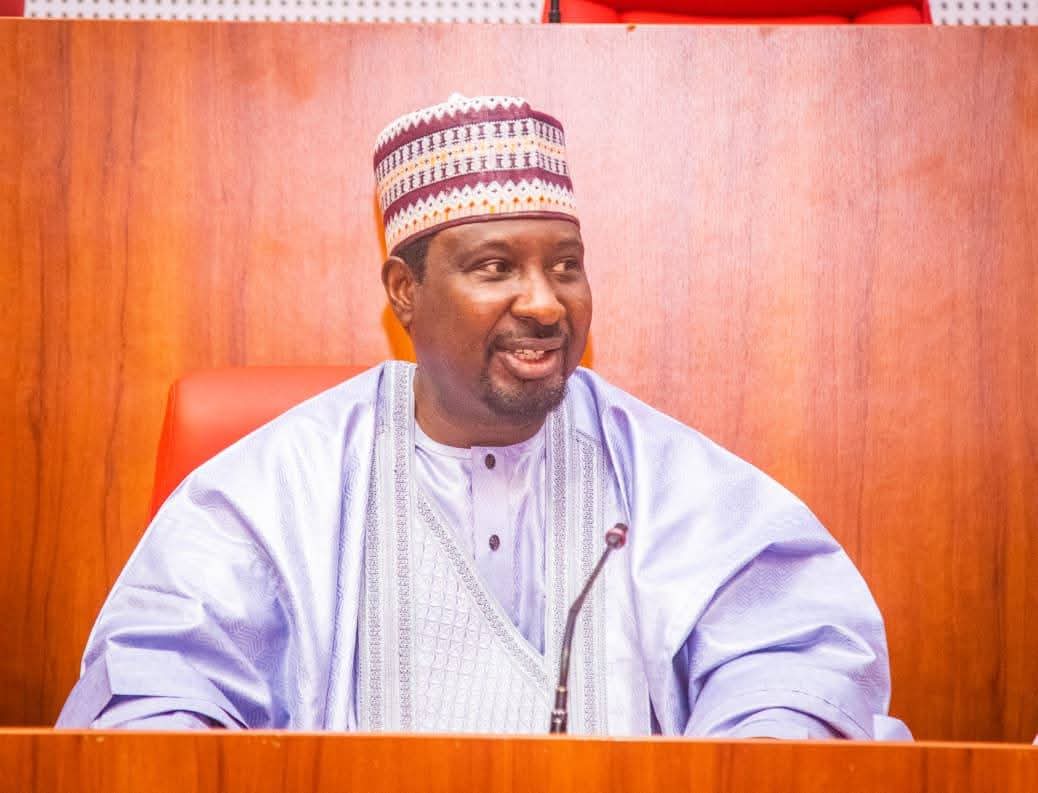
The Deputy President of the Senate, Barau I. Jibrin, PhD, CFR, has, over time, built a record that is both visible and measurable. His re-election, therefore, is not merely about sustaining a political career; it is about preserving a strategic advantage that Kano North currently enjoys within Nigeria’s national power structure.
As the number five citizen in the country, his position offers the zone direct access to influence, opportunities, and federal presence, assets that are neither automatic nor easily replaced.
One of the most remarkable aspects of Senator Barau’s stewardship is his deliberate investment in human capital development.
While some politicians are busy sponsoring mudslinging campaigns to tarnish his growing national image, Senator Barau has been busy building a future for Kano youths.
Recently, the first batch of his foreign-trained scholars returned home: 16 graduates in Cyber Security and Forensic Science, and 10 graduates in Artificial Intelligence and Machine Learning. These are not ordinary certificates. They are the tools of the 21st-century economy, and they are now in the hands of sons and daughters of Kano North.
Subsequent batches are on the way. This is a pipeline of excellence. Lose Barau, and you lose the architect of this intellectual revolution.
If anyone doubts the scale of Senator Barau’s grassroots reach, let them examine the events of April 19, 2026. In continuation of his legendary mega empowerment programmes, the Deputy President of the Senate distributed 47 brand-new cars and 282 motorcycles to critical stakeholders and grassroots mobilisers across the 13 LGAs in Kano North, including party chairmen, party secretaries, primary school headmasters, and secondary school principals, among others. This was a strategic injection of mobility and dignity into the very fabric of the zone’s leadership.
Just five days later, on April 24, 2026, Senator Barau proved that his empowerment initiatives are not one-off events but a continuous process. He announced the continuation of another significant programme launched the previous month: a cash donation of ₦100,000 each to 100 beneficiaries in every one of the 13 LGAs of Kano North.
Taken together, these initiatives reflect a leadership approach that is both strategic and people-centred. They are not isolated gestures but components of a broader vision aimed at uplifting communities, strengthening institutions, and preparing the next generation for global competitiveness.
It is, therefore, not surprising that such a rising profile at the national level may attract political opposition and attempts at distraction.
However, elections should ultimately be guided by evidence, performance, and the long-term interests of the people, not by transient narratives.
Kano North today occupies a position of relevance in Nigeria’s political and developmental landscape. This is not accidental; it is the product of deliberate engagement, years of strategic alliances, and consistent delivery. To risk losing this standing would be to step back from a trajectory of progress that is already yielding results.
The decision before the electorate is, therefore, clear. It is a choice between consolidating and sustaining democratic gains or starting afresh; between sustained access to national influence and uncertain repositioning. In making that choice, the people must ask themselves a simple question: which path best secures their future?
Avoiding a regrettable mistake requires clarity of purpose and fidelity to facts. The record speaks for itself. Continuity, in this instance, is not just desirable; it is essential.
As Kano North looks ahead, the imperative is to protect its voice, preserve its advantage, and ensure that the momentum of development is not interrupted. Re-electing Senator Barau Jibrin is, therefore, not just a political decision; it is a strategic investment in the future of the constituency.
Ishaq writes from Kano. He can be reached at +2348038981655, muazuabdullahi29@gmail.com