


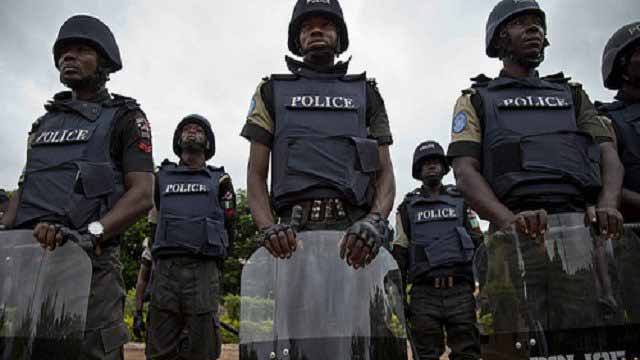
What surprises many observers is that Nigerians have already entrusted state governments with services far more complex than policing, yet they resist giving them control over security. States manage hospitals and primary healthcare centres, run universities and secondary schools, provide drinking water, oversee the judiciary through state high courts, and manage entire state economies through budgets and taxation. If governors can be trusted with the health of citizens, the education of children, access to water, the delivery of justice, and the management of multi-billion-naira economies, then it is illogical to deny them the power to secure those same citizens.
Despite the mistrust of governors reflected in the national debate on the establishment of state police, this is a development that Nigerians should have advocated for and welcomed with open arms. The Federal Government’s move to create state police should not be seen merely as politically motivated but as a life-saving structural adjustment that is most desirable at this moment. It recognizes that security is too critical to be left entirely to a centralized force that is far removed from the problems it must solve.
This article outlines eight reasons why state police must be supported: it brings local knowledge, faster action, and personal commitment; relieves pressure on the overburdened Nigeria Police Force (NPF); creates direct accountability to the people; generates jobs and strengthens state economies; aligns Nigeria with global federal practice while breaking monopoly; provides stronger deterrence and eliminates ungoverned spaces; formalizes existing state security efforts that already demonstrate the demand; and addresses the logistics and mobility challenges currently crippling the NPF.
1. Local Knowledge, Faster Action, and Personal Commitment
Banditry in Zamfara is not the same as cultism in Port Harcourt or kidnapping along the Abuja–Kaduna highway. State police officers will be recruited from local communities, speak local languages, and understand local terrain. This means faster response times and better intelligence gathering. Waiting for federal police deployment from Abuja has cost lives. State forces can act immediately because they are already on the ground.
There is also a strong likelihood that newly recruited personnel will be more committed to service. Their blood relatives, close associates, and family members are the direct beneficiaries of their work. When the safety of one’s parents, siblings, neighbours, and community depends on effective policing, officers are more likely to take their duties seriously, resist corruption, and remain vigilant. Policing one’s own people creates a personal stake in success that a distant, transferred officer may not have.
2. Relieving Pressure and Work Stress on the Nigeria Police Force
The NPF has fewer than 400,000 officers serving over 220 million Nigerians. They are stretched between VIP protection, guarding federal buildings, patrolling highways, and combating bandits, Boko Haram, and ISWAP insurgents. The overwhelming demand for their services has left personnel tired, drained, ineffective, and overloaded.
Officers work long hours with little rest, handle duties outside their core policing responsibilities, and are often deployed far from home. This level of stress reduces alertness, lowers morale, and weakens performance. State police will take over routine policing, traffic control, and community security. This will reduce the burden on federal officers and allow them to focus on terrorism, banditry, cybercrime, and interstate crimes where national coordination is required.
3. Direct Accountability to the People
When a governor controls the state police and the state assembly oversees the budget, citizens know exactly whom to hold responsible if their communities are unsafe. Elections become a genuine tool for security accountability. Under the current system, state governors are called “Chief Security Officers” but have no control over the police. That contradiction ends with state police, and voters can reward or punish performance at the polls.
Some underperforming governors frequently blame insecurity on their lack of control over the police. Several have repeatedly argued that if given the authority to recruit and fund their own police, not a single square kilometre would be left unsupervised. With state police, that argument will be tested. Governors will no longer have excuses, and citizens will be able to judge them directly on the security of lives and property in their states.
4. More Jobs, Stronger State Economies, and Reduced Drivers of Insecurity
Two of the strongest drivers of insecurity are unemployment and poverty. These can be reasonably reduced when all 36 states recruit tens of thousands of new workers to safeguard lives and property. Each state establishing its own police force will create massive recruitment opportunities for graduates and young people. Salaries will be spent locally, strengthening state economies. States can also establish recruitment quotas to ensure fair representation of women and minority communities, making the force more reflective of the people it serves.
The multiplier effects will be significant in local markets. Officers’ salaries will increase demand for food, housing, transportation, and basic services, thereby creating more employment opportunities in manufacturing and service industries. More jobs mean fewer idle youths, and fewer idle youths mean less vulnerability to criminal recruitment.
5. Aligning with Global Federal Practice and Breaking Monopoly
True federal systems such as the United States, Canada, Germany, and India all have state or provincial police forces operating alongside federal agencies. Nigeria’s placement of policing on the Exclusive Legislative List is a colonial holdover. Amending the Constitution to allow state police would bring Nigeria into line with how modern federations secure their citizens. If states can manage complex sectors such as health and education, they can manage policing as well.
State police will also break the monopoly in the security sector and create opportunities for healthy competition in service delivery. When states operate their own police forces, they will be compelled to innovate, improve training, and adopt more effective community policing models. Citizens will be able to compare outcomes across states, and that pressure will raise standards nationwide instead of leaving security delivery to a single centralized structure.
6. Stronger Deterrence Through Presence and the Elimination of Ungoverned Spaces
Crime thrives where police presence is weak or absent. State police will increase officer presence in villages, markets, farms, and along highways. When criminals know that police officers are nearby, the risk of arrest rises significantly. That certainty of arrest prevents more crime than any new law can.
With this increased presence, the era of ungoverned spaces can come to an end. Forests, border communities, and remote rural areas that have long served as hideouts for bandits and kidnappers will no longer remain “no-go areas.” State police familiar with the terrain can patrol, gather intelligence, and maintain permanent outposts, ensuring that government authority reaches every square kilometre.
7. Existing State Security Efforts Demonstrate the Demand
Recent developments in which state governments have established vigilante groups, Hisbah corps, and road traffic enforcement agencies clearly demonstrate the demand for state policing in Nigeria. States are already filling the security vacuum because citizens need protection now.
It is always preferable to have a well-trained, adequately funded, and properly equipped state police force than poorly trained, legally deficient enforcement agencies that create more confusion than solutions. Formalizing state police through constitutional backing and federal standards will replace ad hoc outfits with a professional and accountable structure that meets legal requirements and operates within the rule of law.
8. Addressing the Logistics and Mobility Challenges Facing the NPF
There are also serious logistical challenges confronting the already understaffed NPF. A careful observation of police vehicles reveals that many of them were provided by state governments as support. This demonstrates a greater willingness on the part of states to equip police formations if given the opportunity than the federal government has shown.
With state police, the era of immobile police formations could become a thing of the past. States will directly budget for, maintain, and replace patrol vehicles, communication equipment, and other operational assets for their own forces. Proximity reduces logistics costs, while accountability ensures that resources actually reach officers on the ground instead of becoming trapped in bureaucratic bottlenecks.
Conclusion
As public debate continues, attention must be drawn to what the conversation emphasizes. Too much energy is being spent highlighting fears that governors might use state police to intimidate political opponents, at the expense of addressing the urgent need to combat banditry, insurgency, kidnapping, and other deadly threats that claim Nigerian lives daily.
The Federal Government’s decision to pursue a constitutional amendment for state police is therefore a step in the right direction. It ends the paradox of trusting states with healthcare, education, water resources, the judiciary, and the economy while denying them the most fundamental responsibility of protecting lives. Decentralizing police powers aligns responsibility with authority and gives every state the tools needed to keep its people safe.
Fears of political misuse can be managed through constitutional safeguards, independent oversight boards, and legislative checks. However, the dead cannot be brought back through debate. The real priority must be protecting lives first and then perfecting the safeguards. A police force that is closer to the people, better equipped, and directly accountable is a risk worth regulating far more than the risk of continued insecurity.
Dr. Kawu Adamu Sule writes from the Department of Sociology, Bayero University, Kano, Nigeria.